5 Things an All-Inclusive Wedding Package Doesn't Include
All-inclusive wedding package costs rarely stop at the quoted number. Here are the 5 line items (gratuity, bar, setup hours, vendor fees, tax) that show up later.
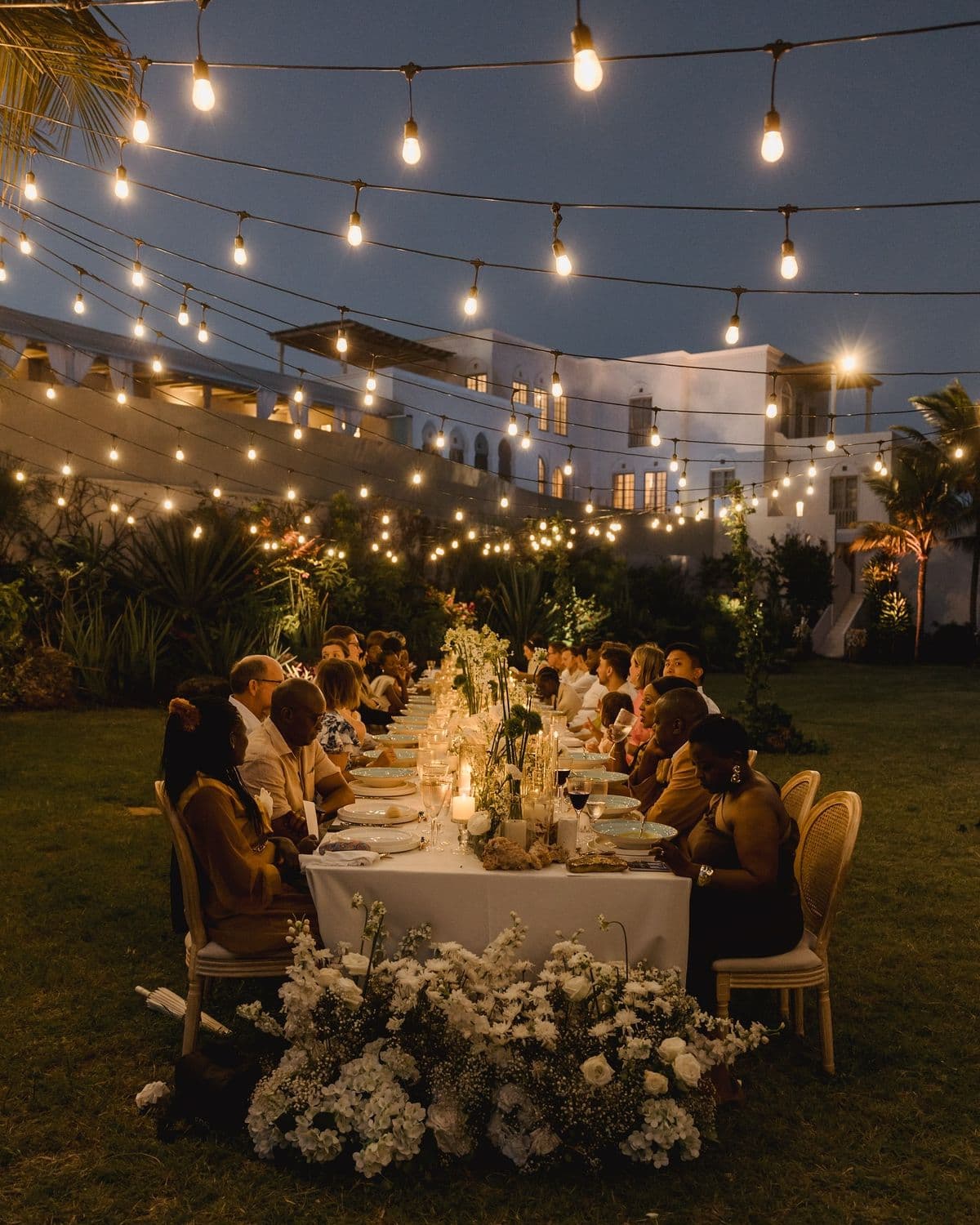
A couple tours a venue on a Saturday. The coordinator says the all-inclusive package is $28,000 for 120 guests: room, tables, chairs, linens, catering, standard bar, four hours of reception, a day-of coordinator. It feels handled. They go home and put $28,000 in the spreadsheet as the venue line.
Eleven months later the final invoice lands at closer to $37,000. Nothing went wrong. No one lied. They added a premium bar tier, they needed two extra hours for setup because the florist's install was bigger than expected, their DJ triggered an outside vendor fee, and then gratuity and sales tax got calculated on top of all of it.
"All-inclusive" sounds like the total number. it almost never is.
This is not a knock on venues. it is just how the documents are structured. The package is the floor, not the ceiling. Here are the five line items that almost never appear in the brochure price, what they typically run, and how to pull the real number out of a contract before you sign it.
01. Gratuity is not bundled, and it is calculated on the big number
Tipping is not included in an all-inclusive package. Budget 15-20% of the package total, on top.
That percentage is the part people underestimate. It is not 15-20% of some small service portion. On most contracts, gratuity (sometimes labeled "service charge," sometimes "administrative fee," sometimes both, which is its own problem) is applied to the food and beverage total, and on an all-inclusive package that is the bulk of the number.
Run it on a $28,000 package. At 18%, that is roughly $5,040. On its own, that single line is bigger than most couples' entire photography budget.
Service charge is not the same as gratuity
Ask this exact question: "Does the service charge go to staff as gratuity, or is it a house fee?" In a lot of contracts, a 20-22% "service charge" is a venue operating fee, and staff tips are still expected separately. If nobody clarifies it, you can end up paying a service charge and then tipping on top, which is a double hit nobody planned for.
Get the answer in writing, in the contract, not in a text from a coordinator who may not be working there in ten months.
02. Premium bar is an upgrade, and almost everyone upgrades
Standard liquor only. Premium spirits, wine upgrades, and cordials cost extra.
The package bar is usually a well tier: house vodka, house whiskey, a couple of beers, two wines that were chosen for cost. That is genuinely fine for a lot of weddings. But most couples do not look at the actual brand list until tasting day, and then they upgrade, because the difference between the house pour and the one they'd actually serve at home is noticeable.
Things that commonly sit outside the standard bar:
- Premium and top-shelf spirits
- Wine upgrades beyond the two house selections
- Champagne for the toast (yes, really, this is often a per-person add)
- Signature cocktails, especially anything with fresh juice, infusions, or more than two ingredients
- Cordials and after-dinner liqueurs
- Extended bar hours past the contracted reception window
Ask for the bar tier sheet with actual brand names on the first visit, not the third. If the house tequila is not something you'd drink, you already know the upgrade is coming, so price it now and put it in your budget instead of discovering it in month nine.
03. Setup hours are shorter than you think
Access windows are often 2-3 hours. Extra load-in time runs $150-500/hr.
This is the one that catches people completely off guard, because nobody plans a wedding imagining setup as a budget line. But a 2-3 hour window is tight for a full floral install, a draped ceiling, a lighting design, a photo booth, place cards for 120, and a band that needs to sound check.
Here is how the overage happens in practice. Your florist quotes a design with installed arrangements on an arch and suspended greenery. That install alone needs three and a half hours. Your window is three. You buy an extra hour at $350, and if the room needs a ceremony-to-reception flip with additional staff, that is often billed separately too.
Questions to ask about your access window
- What time can vendors load in, and what time must they be fully out?
- Is the flip between ceremony and reception included, or an added labor charge?
- What is the exact hourly rate for early access, and is it billed in full-hour increments?
- Is there a separate rate for overtime at the end of the night?
- Does the rate change if it falls outside normal staff hours?
Send your florist and your DJ the access window before you sign. They will tell you in one sentence whether it is realistic. That one email can save you a few hundred dollars.
04. Outside vendors can trigger a fee per vendor
Your florist, DJ, or baker may trigger a vendor fee, often $200-750 per vendor.
Venues keep preferred vendor lists for real reasons: those vendors know the loading dock, the power situation, the noise ordinance, and the exit time. When you bring in someone from outside that list, many contracts charge a fee, both to cover the extra coordination and to protect the relationships on the list.
The math adds up quickly. Bring in an outside florist, an outside DJ, and an outside baker, and at $200-750 per vendor you are looking at $600 to $2,250 you did not plan for. Some venues also require outside vendors to carry specific insurance limits, which can cost the vendor money and get passed to you.
This is negotiable more often than people assume. Things worth asking:
- Can the fee be waived if you book two or more vendors from the preferred list?
- Is the fee per vendor or per vendor category (a DJ who also does lighting may count once or twice)?
- Does it apply to your photographer and videographer, or only to vendors using venue power and space?
- Is it waived for a vendor the venue has worked with before, even if they are not on the current list?
Ask before you fall in love with a florist. Choosing an outside vendor is often still the right call, you just want to make that choice knowing it costs $200-750, not find out after the deposit is non-refundable.
05. Sales tax is never quoted
Sales tax on food and beverage adds 6-10% most states. it is never quoted.
This is the quietest one and the most predictable. The package price you get verbally, and often the one on the proposal PDF, is pre-tax. Tax then gets applied to food, beverage, and in many states the service charge as well, which means you can be taxed on the fee that was calculated on the total.
On a $28,000 package at 8%, that is $2,240. It is not a surprise anyone can negotiate away. It is just a number that has to live in your spreadsheet from day one instead of appearing in the final two weeks when every other deposit is also due.
Red flags to watch for in an all-inclusive contract
Most venues are not hiding anything. But contract language varies enormously, and these are the patterns worth slowing down on:
- A proposal with no "estimated total" line. If the document shows only the package price and no projected final, ask for a full estimate including service charge, gratuity, and tax. A venue that does this well will produce it in a day.
- "Service charge" and "gratuity" used interchangeably. Get clarity in writing on whether staff are tipped out of the service charge.
- A minimum spend that is separate from the package. Some contracts have a food and beverage minimum that the package does not fully satisfy, meaning you have to spend more to hit it.
- Vague access language. "Reasonable setup time" is not a number. Get hours and a clock time.
- Price escalation clauses. Language allowing per-person costs to rise before your date, common on bookings 18+ months out. Ask for a cap.
- Vendor fee amounts that are not specified. "Outside vendor fees may apply" with no dollar figure means you find out later.
- Guest count minimums with no floor adjustment. If you shrink from 120 to 95, you may still pay for 120.
- Overtime rates left blank. Weddings run long. Know the number before the night of.
Negotiate from the real number, not the pretty one
The point of knowing these five is not to talk yourself out of an all-inclusive venue. Package venues can be genuinely excellent value, and the coordination they absorb is worth real money. The point is that the brochure number and the invoice number are two different numbers, and you want to be comparing venues on the second one.
Before you sign, build a line-item estimate that includes:
- Package price for your actual guest count
- Gratuity and/or service charge at 15-20% of the package total
- Bar upgrade, if you already know you'll want one
- Any extra load-in hours at $150-500/hr
- Outside vendor fees at $200-750 per vendor for anyone off the preferred list
- Sales tax at 6-10% on food and beverage
Do that for each venue you're seriously considering and the ranking often changes. The venue that looked $4,000 cheaper on the brochure sometimes lands higher once vendor fees and a short access window are priced in.
Knowing these five line items before you sign means you negotiate from the right number, not the pretty one on the brochure. Save this for contract week, and send it to the friend who just started venue tours.
If you want to see where your total is actually landing, you can add your own quotes free and compare packages side by side with the real numbers attached. For more on the costs that show up late, browse hidden costs, and for contract language worth flagging, see contracts.
Frequently asked questions
- What is usually actually included in an all-inclusive wedding package?
- It varies, but most all-inclusive packages cover the venue rental, tables, chairs, standard linens, catering for a set guest count, a standard (well) bar for a fixed number of hours, basic setup and breakdown, and often a day-of coordinator. What sits outside the package is typically gratuity, premium bar tiers, extra setup or load-in hours, outside vendor fees, and sales tax. Ask for a written list of exactly what the package covers and a separate estimated total that includes service charge, gratuity, and tax, so you're comparing venues on the same basis.
- How much should I budget for gratuity on an all-inclusive package?
- Budget 15-20% of the package total, on top of the quoted price. On a $28,000 package at 18%, that's roughly $5,040. The important detail is what the contract calls it. Many venues charge a 20-22% "service charge" that is a house operating fee rather than a tip distributed to staff, which means gratuity may still be expected separately. Ask directly whether the service charge goes to staff as gratuity or is retained by the venue, and get the answer written into the contract rather than confirmed verbally.
- Can outside vendor fees be negotiated or waived?
- Often, yes. Outside vendor fees typically run $200-750 per vendor, and venues charge them to cover extra coordination and protect preferred-list relationships. Common paths to reducing them: book two or more vendors from the preferred list in exchange for a waiver, ask whether the fee is charged per vendor or per category, confirm whether photographers and videographers count, and check whether a vendor the venue has worked with before can be exempted even if they're not on the current list. Ask before you sign with an outside vendor, not after the deposit clears.
- Why isn't sales tax included in the quoted package price?
- Venues quote pre-tax because tax rates and rules differ by state and sometimes by county, and because catering tax treatment can depend on how items are itemized. Sales tax on food and beverage adds 6-10% in most states, and in many states it also applies to the service charge, meaning you're taxed on a fee calculated from the total. On a $28,000 package at 8%, that's $2,240. It isn't negotiable, so the fix is simply putting it in your budget from the first venue tour instead of discovering it in the final invoice.
- How do I compare two all-inclusive venues fairly?
- Build the same six-line estimate for each: package price at your real guest count, gratuity or service charge at 15-20%, any bar upgrade you know you'll want, extra load-in hours at $150-500/hr, outside vendor fees at $200-750 per vendor for anyone off the preferred list, and sales tax at 6-10% on food and beverage. Rankings frequently flip once you do this. A venue that looks several thousand cheaper on the brochure can land higher after a short access window and vendor fees are priced in.