Your Wedding Budget Isn't One Decision. It's 200 Small Yeses
your wedding budget doesn't break all at once. it leaks 200 times. here's how small add-ons stack into $4,800 you never planned for, and how to catch them.
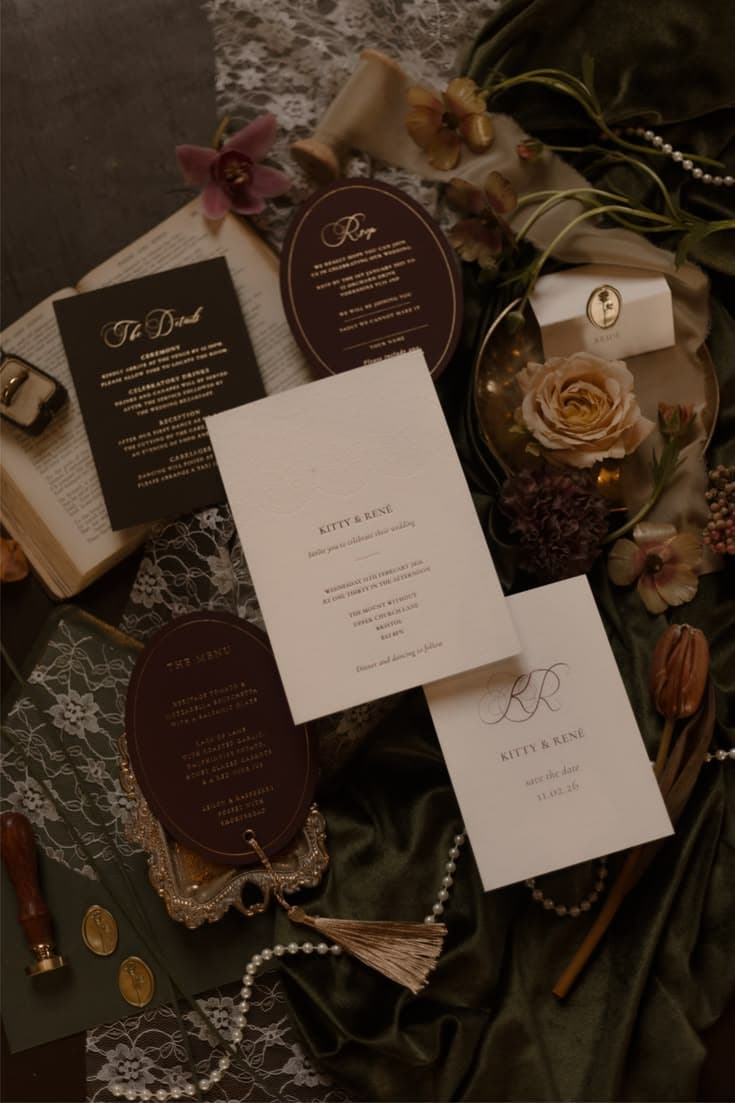
You're standing in your venue at the final walkthrough, eight weeks out, feeling good. The deposit cleared months ago. The catering contract is signed. Then the coordinator says, almost as an afterthought, "and you'll want valet for that guest count, we can add it." You nod. Of course you nod. It's one line. It's the day. What's one more yes?
That's the thing nobody warns you about. Your budget doesn't break all at once. It leaks.
There's no single moment where someone hands you a number and says "this is the one decision that determines everything." It doesn't work like that. It's the cake cutting fee you didn't know existed. The coordinator overtime that kicked in at 10pm. The linen upgrade that felt like nothing at the time. The valet add-on the venue mentioned at the final walkthrough. One by one they feel manageable. Together they're thousands of dollars you didn't plan for, and by the time you see the real total, three deposits are already gone.
the budget is 200 small yeses, not one big decision
Most people picture a wedding budget like a thermostat. You set it once. $30,000, $50,000, whatever the number is. You imagine you'll spend the year nudging it up or down, watching it, in control.
In reality you make somewhere around 200 separate spending decisions before the day arrives. Each one is small. Each one is reasonable on its own. And almost none of them show up in the original number you set.
Here's why that matters. When you sit down and decide "we're spending $50,000," you're deciding it against the big, visible categories: venue, food, photographer, dress. Those are the ones with their own line in every budget template online. But the spending that actually blows past your number lives in the spaces between those lines. It's not the $8,000 catering bill. It's the eleven things bolted onto the $8,000 catering bill that nobody quoted you up front.
You can't make 200 good decisions if you only ever see one. The yeses pile up in the dark, and the total only becomes real once it's too late to undo it.
the gap: what the yeses really cost
Let's make this concrete, because "small fees add up" is the kind of thing everyone says and nobody actually budgets for.
Picture a catering and venue setup that looked clean on paper. Here's the gap between the number you signed for and the number you actually pay:
- $150 cake cutting fee. Your venue charges per slice to cut and plate the cake you already paid a baker to make. You find this out at the tasting, when it's awkward to push back.
- $200 coordinator overtime. The package covered until 10pm. The dancing was good. The DJ kept going. Nobody was watching the clock, and the meter was running the whole time.
- A linen upgrade that "felt like nothing at the time." The house linens were fine, technically, but the napkins clashed with your palette, so you upgraded. Per table. For every table.
- A valet add-on the venue mentioned at the final walkthrough, framed as a courtesy to your guests, priced like a line item.
Each of those is a defensible decision. The cake fee is non-negotiable once you're there. The overtime gave you twenty more minutes you'll remember forever. The linens photographed beautifully. The valet kept Grandma from parking three blocks away.
And together they're $4,800 over before you blink.
That's the gap. Not one catastrophic mistake. A few dozen yeses that each felt like rounding error.
why each one feels manageable
The trap is psychological, not mathematical. A $150 fee on top of a $50,000 wedding reads as 0.3 percent. Who fights over 0.3 percent? But you're not making one 0.3 percent decision. You're making forty of them, and you're making each one in isolation, after you've already emotionally committed to the bigger purchase it's attached to.
By the time the cake cutting fee appears, you love the venue. By the time the linen upgrade appears, you've already pictured the tables. The add-ons arrive exactly when you have the least willpower to say no, because saying no now feels like ruining something you've already decided to love.
where the leaks actually hide
If you want to catch the leaks, it helps to know which faucets are dripping. These are the categories where the gap between quoted and paid is widest.
- Per-person and per-table multipliers. Anything priced "per" is a leak waiting to scale. A $4 upgrade per guest is nothing until you remember you invited 180 people. That's $720.
- Service and gratuity. Catering and venue contracts often add 20 to 25 percent in service charges and tax on top of the food number. On a $8,000 food bill that's potentially $2,000 you may have read past.
- Overtime, on everything. Coordinator, photographer, DJ, band, even the venue itself. Most packages end at a specific hour. Weddings rarely do.
- "House" versus "upgrade." House linens, house chairs, house glassware. The word "house" usually means "the basic version we hope you'll trade up from."
- Walkthrough surprises. Valet, security, insurance, power for the band, a cleaning fee. These tend to surface late, when contracts are signed and you've stopped comparison shopping.
Read more on how these stack in our hidden costs breakdowns, because the specific fees vary by region but the pattern almost never does.
watch for: the red flags that signal a leak
You can't eliminate every fee. Some are legitimate. But you can spot the conditions that let small charges turn into a $4,800 surprise. Watch for these:
- "We'll sort that out closer to the date." This is how add-ons get deferred until you have no leverage. If a vendor won't put a number to it now, ask why, and ask for the ceiling.
- A quote with no itemization. A single bundled figure hides where the money goes and makes it impossible to compare. Ask for the line items. A vendor who won't itemize is a vendor whose total will move.
- The word "starting at." Packages that start at a price end somewhere else. Find out where.
- Verbal yeses at the walkthrough. If it's not written into your running total the moment you agree to it, it doesn't exist to your brain and it absolutely exists to your final invoice.
- Service charge listed separately from tax, listed separately from gratuity. Sometimes you're paying all three. Add them before you sign, not after.
- No mention of overtime rates anywhere. Silence on overtime is not the same as "there is no overtime." Get the per-hour rate in writing so a fun night doesn't cost $200 you didn't plan.
The common thread: anything that's vague, deferred, or unwritten is a leak. The fix isn't being a hardball negotiator. It's making every cost visible early enough that you still have room to say no.
stop the leak: keep one running total
Here's the part that actually changes the outcome. The reason the gap surprises people isn't that the fees are huge. It's that nobody is adding them up in real time.
You can say no to $150 in week three. You cannot say no to $4,800 in week fifty, because by then three deposits are already gone and the wedding is on rails.
So the move is simple to describe and weirdly hard to do by hand: track every quote, every add-on, and every line item in one running total, so you can see the yeses stacking up while you still have room to say no. Not a spreadsheet you update once a month after the fact. A live number that moves the moment a vendor mentions valet, so the cost is real to you before you've nodded.
That's exactly what Altared is built to do. Every quote, every add-on, every line item lands in one running total. When the linen upgrade gets pitched, you see what it does to your number before you agree, not eight weeks later when the final invoice arrives. You catch the leak at the drip, not the flood.
When you can see the total move, the small decisions stop being invisible. You start asking the obvious question at the right moment: is this $200 worth it, given where my number already is? Sometimes yes. Sometimes a hard no. The point is you get to choose, while choosing still costs nothing.
the short version
If you remember nothing else, remember this:
- Your budget is 200 small yeses, not one big decision. Plan for the add-ons, not just the categories.
- The gap is real and specific. A $150 cake cutting fee, $200 coordinator overtime, a linen upgrade, a valet add-on. Together, $4,800 over before you blink.
- Leaks hide in multipliers, service charges, overtime, "house" defaults, and walkthrough surprises.
- Watch for vagueness. "We'll sort it out later," bundled quotes, "starting at," and verbal yeses are all leaks in disguise.
- Keep one running total. You can only say no while the number is still small and the deposits aren't gone.
The wedding doesn't get cheaper because you stopped looking. It just gets more expensive quietly. Catch the yeses while they're still small, and the $4,800 surprise never gets to be a surprise.
Find every markup before it finds you. Start your running total at altared.app.
Frequently asked questions
- What is a cake cutting fee and why do venues charge it?
- A cake cutting fee is a per-slice charge some venues and caterers add to cut, plate, and serve a cake you bought from an outside baker. It often runs around $150 and tends to surface at the tasting or final walkthrough, after you've already committed to the venue. It's framed as a service cost, but it's also a common upsell. Ask whether it applies before you sign, and if it does, factor it into your running total so it isn't a surprise on the final invoice.
- How can a few small wedding fees add up to thousands?
- Because you make roughly 200 separate spending decisions, and each add-on feels like rounding error against the big number. A $150 cake cutting fee, $200 in coordinator overtime, a per-table linen upgrade, and a valet add-on each feel manageable alone. Stacked together they can be $4,800 over before you blink. The damage isn't one big mistake, it's dozens of small yeses made in isolation, usually right when you have the least willpower to say no.
- What's the best way to track wedding add-ons and avoid surprises?
- Keep one live running total instead of a spreadsheet you update after the fact. The reason add-ons surprise people is that nobody sums them in real time, so a verbal yes at a walkthrough never feels like spending until the invoice arrives. Altared tracks every quote, add-on, and line item in one running total, so you see your number move the moment a vendor mentions valet or a linen upgrade, while you still have room to say no.
- Which wedding costs are most likely to be hidden?
- Watch anything priced 'per person' or 'per table,' since small upgrades scale fast across a guest list. Service charges, tax, and gratuity can add 20 to 25 percent on top of catering. Overtime applies to coordinators, photographers, DJs, and bands once the day runs past the package window. 'House' linens and chairs are usually the basic version meant to be upgraded. Walkthrough surprises like valet, security, and cleaning fees tend to appear late, after contracts are signed.