Where Every Dollar of Your Wedding Budget Actually Goes
Wedding budget percentages, broken down line by line: venue 28-35%, catering 25-35%, photography 10-12%, florals 8-10%, music, and everything else.
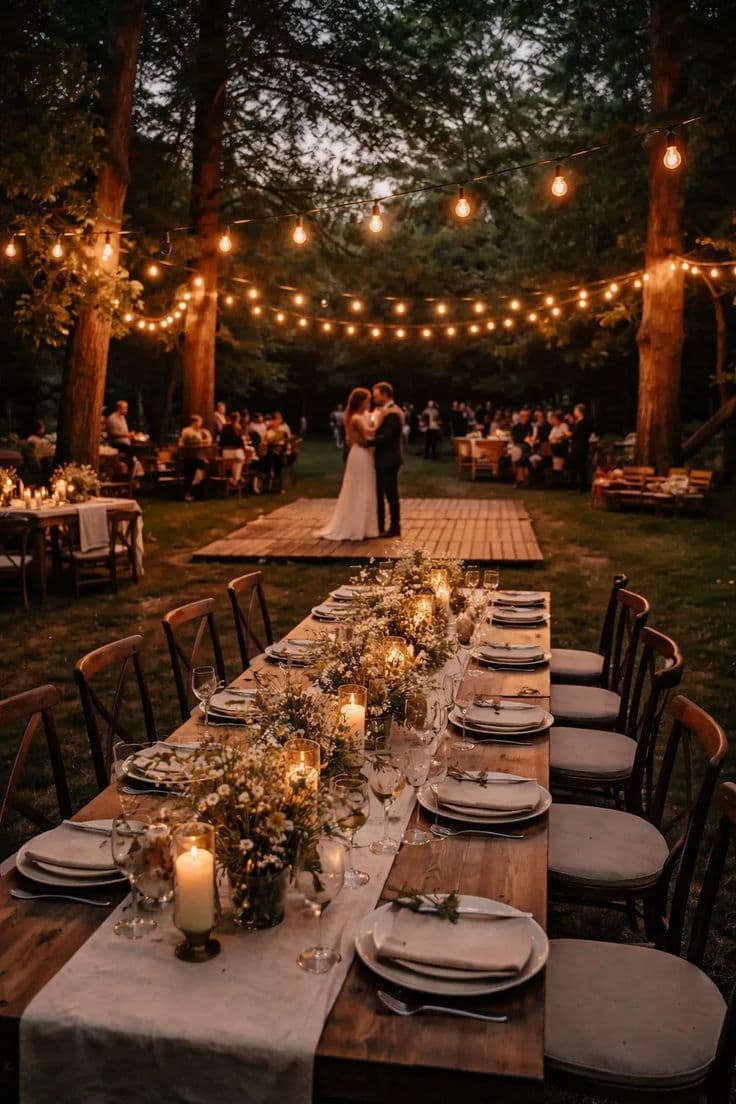
a couple sits down with a spreadsheet and a $40,000 number they agreed on over dinner. they type in the categories they can think of: venue, food, photographer, flowers, dress, dj. then they start filling in guesses. venue: $8,000. catering: $6,000. flowers: $1,500. it adds up to something under $40,000, so they feel good and they go to bed.
three months later the venue quote comes in at $13,200 with the mandatory bar minimum, the caterer is quoting $118 per head before service charge, and the florist's proposal for "the look from the inspo photos" is $4,800. nothing has gone wrong yet. the budget was just built on vibes instead of proportions.
most couples build a budget without knowing what the real split looks like. that's the actual problem. not overspending, not bad vendors, not inflation. the split. so here is where every dollar actually goes, by percentage, ranked biggest to smallest.
the six slices, ranked
before the detail, here's the whole picture in order:
- venue — 28-35% of total budget
- catering (food, bar, service) — 25-35%
- photography — 10-12%
- florals — 8-10%
- music — 3-5% for a dj, 8-15% for a band
- everything else (attire, cake, transport, gratuity) — 10-15%
the thing to notice immediately: venue and catering together can run 60-70% of the total. which means every other vendor you care about, your photographer, your florist, your band, your dress, your tips, is splitting what's left. that's the whole game. if you don't protect that back half early, it gets squeezed.
venue: 28-35%, and it happens first
the venue is the single biggest line, and it eats 28-35% of total budget before you've booked a single thing. that timing matters more than the number. venue is usually the first contract you sign, often twelve to eighteen months out, before you've priced a photographer or gotten a single floral proposal. so you commit a third of your money while you still have the least information about everything else.
on a $40,000 budget, 28-35% is $11,200 to $14,000. on a $60,000 budget it's $16,800 to $21,000.
what actually sits inside "venue"
venue rarely means one clean number. read for these:
- site fee or rental fee (the headline number)
- food and beverage minimum, which is not the same as your catering estimate
- required insurance
- security staffing at a per-hour, per-guard rate
- overtime past a hard end time
- ceremony fee if you're also getting married on site
- cleaning or damage fees
a venue quoting $9,000 with a $15,000 f&b minimum is not a $9,000 venue. if you run the math before you sign, you'll know whether you're looking at 30% of budget or 45%.
catering: 25-35%, and it scales with every yes
catering is food, bar, and service, and it's 25-35% of total budget. the critical difference from venue: catering grows every time you add a guest. venue is mostly fixed once you sign. catering is a multiplication problem you keep re-solving every time someone's plus-one becomes real.
this is why guest count is a budget decision, not a guest list decision. at $118 per head, twelve extra people is $1,416 in food alone, plus their share of bar, plus two more centerpieces, plus another table's worth of linen and rentals.
where catering quotes get slippery
the per-head number is almost never the per-head number. add:
- service charge, often 20-24% of the food and beverage subtotal
- sales tax, which in most places applies to the service charge too
- bartender and staffing fees quoted separately
- cake cutting fee
- corkage if you're bringing your own wine
- tastings, sometimes billed if you bring extra people
a $110 per head quote for 120 guests is $13,200 on paper and closer to $17,000 once service charge and tax land. that difference is more than most couples budget for photography.
photography: 10-12%, and the only thing you keep forever
photography sits at 10-12% of budget, and most people underestimate it. it's also, genuinely, the only thing you keep forever. the flowers are compost by tuesday. the food is a memory. the photos are what your budget actually produced.
on a $40,000 budget, 10-12% is $4,000 to $4,800. if your photographer quote is meaningfully below that range, look at what's been removed: hours of coverage, second shooter, engagement session, album, turnaround time, raw file rights.
the hours trap
eight hours sounds like a lot until you map it. getting ready starts at 1pm, ceremony at 4pm, reception ends at 10pm. that's nine hours, and you're paying overtime for the last one at a rate you agreed to in a contract you read once, in january. overtime rates are typically the easiest line to negotiate before signing and the hardest to argue after.
florals: 8-10%, and the most underestimated line on the list
florals land at 8-10%, and couples routinely underestimate this one. more than any other category. the gap between what people budget for flowers and what flowers cost is the single most common budget shock in planning.
here's why. couples budget for bouquets. they price out a bridal bouquet, five bridesmaid bouquets, boutonnieres, and think they've covered flowers. what the inspo photo actually contains is:
- ceremony arch or installation
- aisle arrangements
- twelve to eighteen reception centerpieces
- bar and escort card arrangements
- cake flowers
- labor, delivery, setup, and breakdown (breakdown is a real line, and it's often late-night hourly)
on a $40,000 budget, 8-10% is $3,200 to $4,000. an arch alone can be a quarter of that. when you send a florist an inspiration photo, ask directly: "what does this specific image cost to recreate at my guest count?" the answer is the fastest budget reality check in planning.
music: 3-5% for a dj, 8-15% for a band
this is the one slice where you choose your own percentage. a dj is closer to 3-5%. a band runs 8-15%. same night, same dance floor, a spread of up to 10% of your entire budget.
on a $40,000 budget: a dj is roughly $1,200 to $2,000, and a band is $3,200 to $6,000. neither is the right answer. but you should know which one you're picking before you build the rest of the budget around it, because a band at the top of its range effectively borrows from florals, photography, or guest count.
watch for these in music contracts
- overtime per 30 minutes, not per hour
- ceremony sound as a separate add-on
- travel, lodging, and meals for band members
- idle time or cocktail hour coverage billed separately
- deposit that becomes non-refundable at a date you didn't note
everything else: the last 10-15%
attire, cake, transport, gratuity, and the long tail: stationery, hair and makeup, rentals, favors, officiant, marriage license. all of it lands in the last 10-15%.
this slice is dangerous specifically because it's a pile, not a line. nobody signs one contract for "everything else." you sign eleven small ones, each of which feels small, and together they're $4,000 to $6,000 on a $40,000 budget.
gratuity deserves its own mention. it's real money, it's usually cash, and it's usually due on a day when you are not thinking about money. build it in early or it becomes a surprise charge on a credit card in the last week.
red flags to watch for in any quote
these are the signals that a quote is going to grow after you sign:
- a per-head price with no service charge or tax shown. ask for the all-in number at your actual guest count, in writing.
- "starting at" language. starting at is a marketing number, not a quote.
- a food and beverage minimum you can't hit with your real guest count. you'll pay the difference for food nobody eats.
- no overtime rate specified. if it's not in the contract, it's set on the night, by them.
- "setup and breakdown included" with no hours attached. late-night breakdown is where florists and rental companies bill overages.
- a deposit schedule with no cancellation or postponement terms. ask what happens if the date moves.
- your venue and catering together penciling past 70%. it's not automatically wrong, but everything else is now on a very short leash, and you should decide that on purpose.
if you want more on the line items that don't show up in the headline number, we go deeper in /blog/category/hidden-costs.
do this before your next vendor conversation
knowing these percentages before you sign is the difference between a budget that holds and one that quietly blows past itself by spring.
- write your total number first, then apply the percentages, then shop. not the other way around.
- assume venue plus catering is 60-70% and build the rest of your plan inside what's left.
- decide dj (3-5%) or band (8-15%) early, because it changes every other slice.
- ask every caterer for an all-in per-head number including service charge and tax.
- send your florist the actual inspo photo and ask what it costs at your guest count.
- budget gratuity as a line, not as a surprise.
- re-run the whole split every time your guest count changes.
you can add your own quotes free at altared and see exactly how your split compares to these benchmarks, line by line. no card, no catch. get started.
Frequently asked questions
- What percentage of a wedding budget should the venue be?
- The venue is typically 28-35% of your total budget, making it the single biggest line item. On a $40,000 budget that's roughly $11,200 to $14,000. The tricky part is timing: venue is usually the first contract you sign, often twelve to eighteen months out, before you've priced anything else. Read for the extras hiding inside the venue number, including food and beverage minimums, required insurance, security staffing, ceremony fees, and overtime past a hard end time. A venue quoting $9,000 with a $15,000 f&b minimum is not a $9,000 venue.
- How much of a wedding budget goes to catering?
- Catering, meaning food, bar, and service together, runs 25-35% of total budget. Unlike venue, it scales with every guest you add, so it's the line that keeps changing right up until your final headcount. The quoted per-head price is almost never the real per-head price. Add service charge (often 20-24%), sales tax that usually applies to the service charge too, separate bartender fees, cake cutting fees, and corkage. A $110 per head quote for 120 guests reads as $13,200 and lands closer to $17,000 all in.
- Why do couples underestimate wedding florals?
- Florals should be 8-10% of budget, but couples routinely underestimate this one more than any other category. The reason is scope. Most people price bouquets and boutonnieres and assume flowers are covered. The inspiration photo they showed the florist actually includes a ceremony arch, aisle arrangements, twelve to eighteen centerpieces, bar and escort card florals, cake flowers, plus labor, delivery, setup, and late-night breakdown. On a $40,000 budget, 8-10% is $3,200 to $4,000, and an arch alone can eat a quarter of that.
- Should I book a DJ or a band based on my budget?
- Music is the one slice where you effectively choose your own percentage. A DJ is closer to 3-5% of budget, while a band runs 8-15%. On a $40,000 budget that's roughly $1,200 to $2,000 for a DJ versus $3,200 to $6,000 for a band, a spread of up to 10% of your entire budget for the same dance floor. Neither choice is wrong, but decide early, because a band at the top of its range borrows directly from florals, photography, or guest count.
- How much should I budget for everything else, like attire and tips?
- Attire, cake, transport, gratuity, stationery, hair and makeup, rentals, officiant, and the marriage license all share the last 10-15% of budget. This slice is risky because it isn't one contract, it's ten or eleven small ones that each feel minor and together run $4,000 to $6,000 on a $40,000 budget. Gratuity in particular deserves its own line. It's real money, usually cash, and usually due on a day when you are not thinking about money. Build it in early rather than absorbing it in the final week.