5 DIY Wedding Ideas That Cost More Than Hiring It Out
DIY wedding math hits different once you total every supply. Here are 5 DIY wedding ideas that cost more than hiring out, with real dollar comparisons.
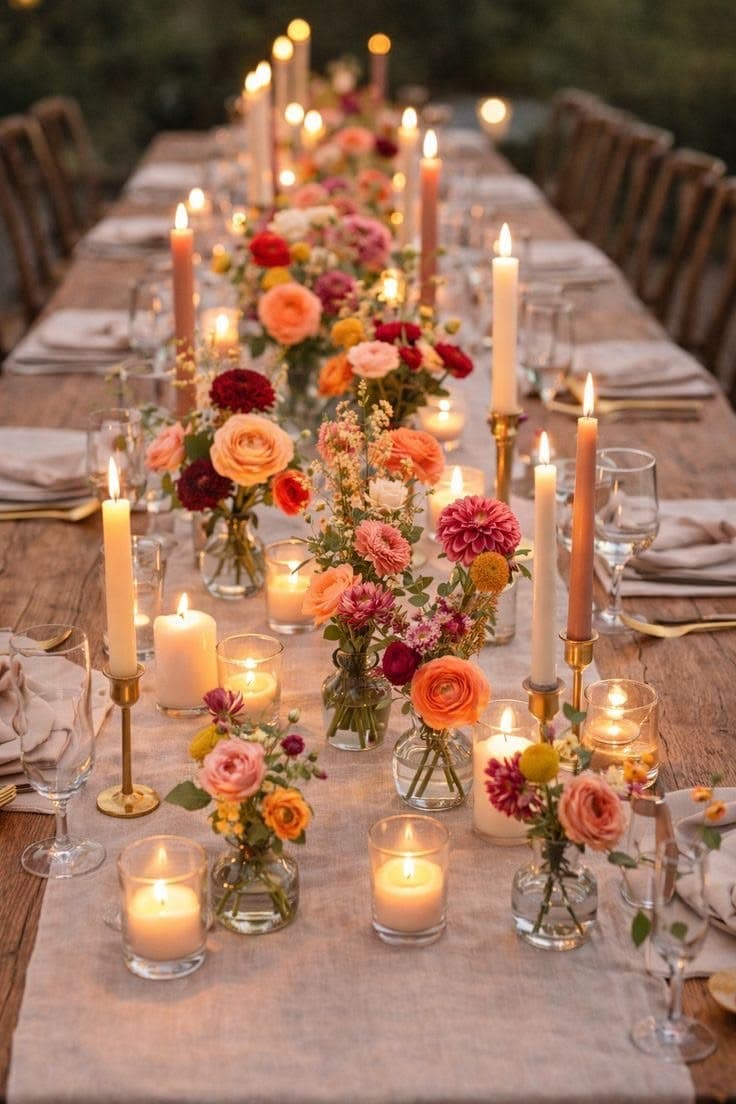
Picture it: you've got 40 buckets of wholesale flowers crammed into your bathtub, a rented cooler humming in the garage, and three days until the wedding. You bought the wire, the tape, the shears, the ribbon. You watched the tutorials. And when you finally add up the receipts, the "cheap" DIY florals landed at $1,200. The florist you passed on quoted $900.
That's the DIY wedding trap in one scene. The idea sounds like savings because you're only picturing the big-ticket item you're skipping (the florist, the caterer, the print shop). What you're not picturing is the long tail of supplies, rentals, and labor that quietly stacks up behind it. DIY math hits different when you see the real total.
None of this means skip the DIY. Some projects genuinely save money, and some are worth doing even when they don't (because you want the story, or the control, or the afternoon with your mom gluing place cards). It just means you should price it out line by line before you commit, not after you've bought the supplies. Here are five DIY ideas that surprise couples the most, with the real numbers behind them.
1. DIY florals
Flowers feel like the obvious win. Wholesale stems are a fraction of retail, so why pay a florist's markup?
Because the stems are only part of what a florist charges for. When you DIY, you're buying:
- Wholesale flowers (often more than you think, because you'll lose 10 to 20 percent to broken or wilted stems)
- A cooler or refrigeration rental to keep everything alive for two to three days
- Buckets, floral foam, tape, wire, shears, and ribbon
- Vases and vessels, unless you're renting those too
- Your own time, and usually a friend or two you're "paying" in pizza and wine
Add it up and wholesale flowers, cooler rental, and supplies can hit $1,200+ versus a florist's $900 quote. The florist number already includes their design skill, their loss on damaged stems, delivery, and setup. When you DIY, you eat all of that yourself, plus the stress of arranging 20 centerpieces the night before your wedding.
DIY florals can absolutely save money at a smaller scale (think a handful of bud vases, or bouquets only). It's the full-room, every-table version where the total sneaks past a real quote.
2. Homemade cake
The ingredients for a wedding cake are cheap. Flour, sugar, butter, eggs. Maybe $200 if you're being generous.
The problem is that a wedding cake is not just ingredients. It's equipment and infrastructure you probably don't own:
- Tiered pans in multiple sizes
- Fondant, and enough of it to redo the batch you mess up
- Cake boards and dowels for structural support
- Boxes and a way to transport a tiered cake without it collapsing in your back seat
- A practice bake, because you do not want your first-ever tiered cake to be the one 100 people photograph
Pans, fondant, boards, boxes, and a practice bake alone add $300 to a $200 ingredients bill. So your "$200 cake" is realiztically $500 before you factor in the two full days of your life it takes, the fridge space it eats, and the risk that it doesn't survive the drive.
A small bakery sheet cake for the kitchen plus a modest display tier is often the smarter middle ground. You get the photo moment without betting your reception dessert on a skill you're learning for the first time under a deadline.
3. Printed invites
This is the one people are most convinced they're saving on, because printing at home feels free. It isn't.
A full invitation suite (invite, RSVP card, details card, envelopes) has real per-unit costs when you print it yourself:
- Design software or template fees
- Cardstock, and the good weight is not cheap
- Ink, which drinks through cartridges faster than you'd guess on heavy stock
- Envelopes, inner and outer
- Postage, and odd-sized or heavy suites cost more to mail
Printed invites at home run $6 to $9 per suite once you add cardstock, ink, and postage, while a print shop lands closer to $3 to $5 per suite. For 100 guests, that's a swing of roughly $300 to $600, and the print shop version usually looks better because commercial printers handle heavy cardstock and color far more consistently than a home inkjet.
the exception
If you're doing a tiny guest list, or you already own a nice printer and you're printing on stock you have, home printing can pencil out. The math flips against you fast as the count climbs, though, because every suite carries all those per-unit costs again and again.
4. Photo booth
A DIY photo booth feels like pure personality for pennies. Grab a camera, hang a backdrop, done. Then you actually shop for the parts.
To match what a rental gives your guests, you're buying or renting:
- A camera or tablet setup capable of instant capture
- A backdrop and a stand to hold it up
- A photo printer, because guests want to walk away with a print
- Photo paper and ink, which are a recurring cost all night
- Props, lighting, and something to trigger the shot
Camera rental, backdrop, printer, and paper average $700 versus a vendor's flat $500 package. And the vendor package comes with an attendant who fixes jams, reloads paper, and keeps the line moving, so you're not the one troubleshooting a printer in your wedding clothes. The DIY booth averages around $700 in gear once you actually add it up, and that's before anyone's time to build and run it.
If you want a booth on a real budget, a simple backdrop plus a Polaroid or two and a basket of film gives you the vibe for far less than either a full DIY rig or a vendor. Just don't confuse "phone plus a printer" with "cheaper than hiring it," because it usually isn't.
5. Self-catering
This is the big one, the number that shocks couples the most. Cooking for your own wedding sounds like enormous savings because restaurant and caterer per-head rates feel high. But the per-head rate a caterer quotes covers a lot more than food.
When you self-cater, you're on the hook for:
- All the food, bought at retail or club-store prices, not wholesale
- Rentals: chafing dishes, serving platters, plates, flatware, glassware, linens
- Prep and storage space, and often extra refrigeration
- Day-of kitchen help, because someone has to cook, plate, and serve while you're getting married
- Tipping that kitchen crew, which is easy to forget until the day of
Food, rentals, and a day-of kitchen crew tip push cost to $85+ per head versus $65 catered. For a 100-person wedding, that's $8,500 doing it yourself against $6,500 catered, and the catered version means nobody in your family is stuck plating chicken instead of celebrating. Self-catering can push $85+ per head by the time you include rentals and tip the kitchen help, which is often more than a catered per-head rate.
Self-catering can work for a very small, casual wedding where the "menu" is genuinely simple. At full scale, the rentals and labor almost always erase the food savings.
watch for these red flags
Before you commit to any DIY project, run through this gut check. If you see these, price it out again very carefully:
- You've only budgeted the obvious item (the flowers, the food) and not the supplies, rentals, and tools around it
- The plan requires you or your wedding party to be working during the wedding
- You're buying equipment you'll use exactly once (a photo printer, tiered pans, a cooler rental)
- The savings depend on nothing going wrong (a first-try tiered cake, an inkjet that never jams)
- You're comparing your DIY food cost to a caterer's food cost, instead of to the caterer's all-in per-head rate
The pattern across all five ideas is the same. DIY sounds like savings until you price out every single thing you need to pull it off, and the hidden line items (rentals, supplies, labor, tips) are exactly the things a vendor quote already includes.
how to actually decide
DIY is not the enemy. Blind DIY is. The couples who save real money are the ones who total every line before buying anything, then compare that total to a real quote. Sometimes DIY wins. Sometimes it loses by $300 and a weekend of your sanity. The only way to know is to do the math on your own numbers, in your own city, for your own guest count.
If you want the comparison done for you, drop your quotes into Altared and it lines up the DIY total against the vendor rate so you can see which ideas actually save. For more of these gotchas, our hidden costs posts break down where wedding budgets quietly leak.
Here's the short version to save:
- DIY florals: wholesale flowers, cooler, and supplies can hit $1,200+ vs. a $900 florist quote
- Homemade cake: pans, fondant, boards, boxes, and a practice bake add $300 to a $200 ingredients bill
- Printed invites: $6 to $9 per suite at home vs. $3 to $5 outsourced
- Photo booth: about $700 in gear vs. a vendor's flat $500 package
- Self-catering: $85+ per head all-in vs. $65 catered
Price it out line by line before you commit, not after you've bought the supplies.
Frequently asked questions
- Is DIY always more expensive than hiring a wedding vendor?
- No. DIY genuinely saves money on smaller, simpler projects (a few bud vases, a tiny guest list of home-printed invites, a casual small-wedding menu). It tends to lose at full scale, because the supplies, rentals, one-time equipment, and day-of labor stack up past what a vendor quote already includes. The only reliable way to know is to total every line item for your own guest count and city, then compare that number to a real quote. Sometimes DIY wins by a lot. Sometimes it loses by a few hundred dollars plus a weekend of stress.
- Why does DIY catering cost so much when the food is cheap?
- Because the food is only part of the bill. When you self-cater you also pay for rentals (chafing dishes, plates, flatware, glassware, linens), extra refrigeration and prep space, day-of kitchen help to cook and serve while you're getting married, and a tip for that crew. Add it all up and self-catering can push $85+ per head, which is often more than a caterer's all-in rate of around $65 per head. The mistake is comparing your food-only cost to the caterer's total cost.
- How much do DIY wedding invitations really cost?
- Printed at home, a full suite (invite, RSVP, details card, envelopes) runs $6 to $9 per suite once you add design software, good cardstock, ink, envelopes, and postage. A print shop lands closer to $3 to $5 per suite and usually looks better because commercial printers handle heavy stock and color more consistently. For 100 guests, that difference is roughly $300 to $600. Home printing can still pencil out for very small guest lists or if you already own a capable printer and stock.
- Is a DIY photo booth cheaper than renting one?
- Usually not. A DIY booth averages around $700 in gear once you total the camera or tablet, backdrop and stand, photo printer, paper, ink, props, and lighting. A vendor's flat package often runs about $500 and includes an attendant who reloads paper, clears jams, and keeps the line moving. With DIY, you're both buying the gear and becoming the tech support during your own reception. A pared-back option like a Polaroid and a basket of film gives you the vibe for far less than either.
- What DIY wedding projects actually save money?
- The ones with low per-unit cost and no rentals, one-time equipment, or day-of labor tend to save. Think small-batch florals like bouquets or a few bud vases, favors, signage, place cards, playlists instead of a DJ for a casual event, and simple desserts rather than a full tiered cake. The projects that backfire are the ones needing rented equipment (coolers, chafing dishes), single-use tools (tiered pans, a photo printer), or a person working through your wedding. Price every project line by line before buying anything.