5 Wedding Services You Can DIY Without Anyone Noticing
Five wedding services you can DIY without anyone noticing, plus exactly what each one saves you. Real dollar figures and where to put the money instead.
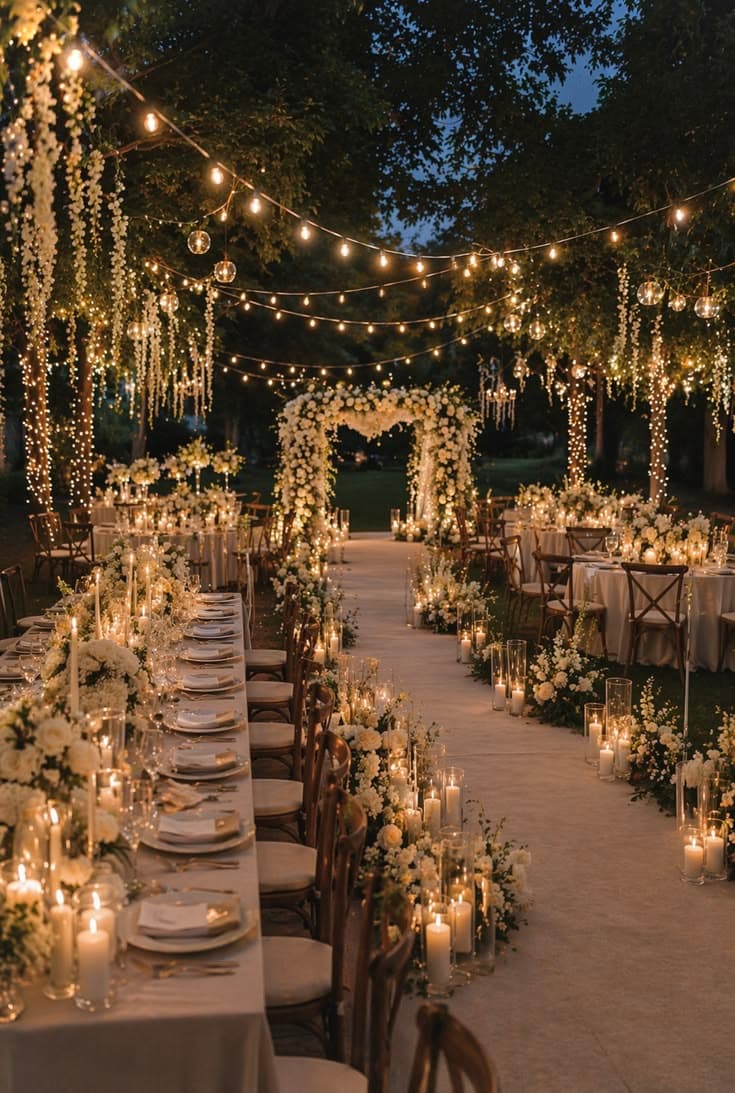
Picture this: it's the end of the night, the last song is fading out, and a guest leans over to tell you the candles on the tables were the prettiest part of the room. those candles cost you $1.50 each. she will never know that. she'll just remember the warm light and the way the whole space glowed.
that's the entire idea behind smart wedding DIY. not cutting corners, but knowing which corners only show up on your invoice and not in anyone's memory of the day. some line items genuinely need a professional. your photographer can't be replicated. neither can great food or a band that reads the room. but a handful of things you're quoted hundreds (or thousands) of dollars for? you can absolutely do those yourself, and no one at your reception will be able to tell.
the math is real here. the average couple who DIYs three or more of these saves $2,000 to $3,500. that's money that goes straight back into the stuff that actually can't be faked. below are the five services worth taking off your vendor list, what each one costs to do yourself, and what you'd otherwise pay.
1. invitations: $120 instead of $900+
stationery is the first place a lot of couples quietly overspend, mostly because custom suites are sold as a package with design, proofing, printing, and assembly all bundled together. the design and proofing are where the markup lives.
here's the swap. build your suite in canva pro, then send the final files to a printer like minted for the physical cards. you get a polished, professionally printed result for around $120 versus $900 or more for a fully custom designer suite.
a few things that make this look intentional instead of homemade:
- pick one font pairing and stick with it across the invite, RSVP, and details card.
- leave generous white space. crowded invitations are the giveaway.
- order one test print before you commit to the full run so you can check color and paper weight in person.
- match your envelope color to your palette. it's a small detail that reads expensive.
the printing matters more than the design software, honestly. heavy cardstock and a clean envelope do most of the work of making something feel custom. nobody flips your invitation over to check whether a designer drew it.
when to still hire out
if you want letterpress, foil, or hand calligraphy, those are craft techniques, not just design choices, and they're hard to fake convincingly. if those details are non-negotiable for you, keep that vendor and find your savings elsewhere on this list.
2. welcome signs: a $40 mirror beats a $300 rental
walk into most wedding rental catalogs and you'll find welcome signage priced like furniture. a single acrylic or vintage-mirror welcome sign rents for around $300, and you're handing it back at the end of the night.
instead, buy a $40 mirror from amazon (or a thrift store, or a yard sale) and write your welcome message on it with a paint pen. a $40 mirror from amazon beats a $300 rental, and you keep it afterward. white paint pens give you that clean modern look. for something softer, use a chalk pen on a framed chalkboard.
if your handwriting isn't sign-worthy, here's the trick: design the text in canva, print it as a stencil, tape it behind the glass, and trace it. you get clean, even lettering without a steady hand or a calligraphy budget.
the same logic applies to other signage. table numbers, bar menus, and the seating chart can all come out of the same canva file and the same paint pen. one afternoon, one set of supplies, and you've replaced several rental line items at once.
3. favors: $1.50 each instead of $8+
favors are the clearest example of paying for a vendor's packaging rather than the thing itself. boutique favors run $8 or more per guest. at 100 guests, that's $800 for trinkets, and let's be honest about how many of those actually make it home.
bulk candles or honey jars cost about $1.50 each. that's the same $100-guest list for roughly $150 instead of $800. order in bulk, add a small printed tag (from that same canva file you already built), and you're done.
the favors people actually keep tend to be the ones they can use:
- small candles in a simple glass vessel
- mini honey or jam jars with a kraft-paper label
- local treats, like a wrapped cookie or a bag of coffee
- a tiny potted succulent or packet of seeds
no one at your reception will know those candles came from a bulk order. they'll just light them. the tag and the table presentation are what people register, not the supply chain behind them.
4. ceremony music: a playlist saves $400 to $800
live ceremony musicians are lovely, and if a string quartet is your dream, that's a worthy splurge. but a lot of couples book live ceremony music out of a vague sense that they're supposed to, then pay $400 to $800 in fees for about twenty minutes of actual playing.
a curated spotify playlist does the same job for free. you control the exact songs, the exact order, and you never worry about a musician learning your processional track. all you need is a decent bluetooth speaker (your venue may already have a sound system you can plug into) and a person you trust to hit play.
build three short playlists:
- prelude, for as guests arrive and find their seats
- processional, for the wedding party and your entrance
- recessional, for the walk back up the aisle and the first minutes after
a few practical notes. download everything for offline playback so a weak signal doesn't strand you mid-aisle. turn off shuffle and autoplay so spotify doesn't queue up something random after your recessional. and assign one specific person to run it, ideally not someone in the wedding party who'll be walking down the aisle themselves.
5. day-of decor: cut your styling bill by $1,200
decor and styling is where the biggest single chunk of savings usually hides. full-service styling, where someone sources, sets up, and breaks down your centerpieces and accents, can add $1,200 or more to your bill.
borrowed and thrifted pieces cut styling bills by $1,200 when you're willing to do the sourcing yourself. vases, candle holders, mirrors, lanterns, table runners, and frames are exactly the kind of thing other couples are desperate to offload after their own weddings. check local wedding resale groups on facebook, thrift stores, and friends who married in the last year or two.
a realistic plan looks like this:
- start collecting six to twelve months out so you're not panic-buying.
- stick to one or two colors and two or three vessel shapes for a cohesive look.
- group items in odd numbers down the center of each table.
- recruit a small crew (not yourselves) to set up the morning of and pack down at the end.
the setup labor is the part people forget. you do not want to be arranging centerpieces in your wedding dress, so the one thing worth protecting here is a few volunteers or a low-cost setup-only service.
red flags to watch for
DIY saves real money, but a few traps quietly eat the savings (or your sanity). watch for these:
- shipping and rush fees. that $1.50 candle isn't $1.50 if you pay $90 to overnight 100 of them. order early and factor shipping into every bulk price.
- the "while i'm at it" spiral. budget DIY turns expensive when one project becomes five. pick the few that matter and stop.
- doing it yourself on the actual wedding day. anything that requires your hands on the day of (setup, signage, playing music) needs a delegated person. you should be getting married, not troubleshooting a speaker.
- vendor minimums disguised as savings. some rental or print shops have order minimums that wipe out the deal. read the fine print before you assume you're ahead.
- sentimental overcorrection. if live ceremony music or a custom invitation suite genuinely matters to you, keep it. the point is to cut what your guests won't notice, not what you'll regret.
where your savings should actually go
here's the quietly important part. the goal of DIYing these five things isn't just to spend less overall. it's to move money toward the things that can't be replicated. your photographer, your food, your band. those are the elements people remember and the ones that have zero good DIY substitute.
so if you DIY your invitations, signs, favors, music, and decor and bank somewhere in that $2,000 to $3,500 range, the smart move is to redirect it, not just pocket it. an extra hour of photography coverage, a better entree, an upgraded band package: that's what your guests will feel.
if you're not sure where the rest of your budget has room, that's exactly the kind of thing worth checking before you sign anything. drop your real vendor quotes into altared and you can compare them side by side and see which line items are inflated. more on that approach over in budgeting, or just get started and find yours free.
the quick version
save this before you book anything:
- invitations: canva pro + a printer like minted, about $120 instead of $900+.
- welcome signs: a $40 mirror from amazon instead of a $300 rental.
- favors: bulk candles or honey jars at $1.50 each instead of $8+.
- ceremony music: a curated spotify playlist instead of $400 to $800 in fees.
- day-of decor: borrowed and thrifted pieces to cut styling bills by $1,200.
do three or more and you're realistically looking at $2,000 to $3,500 back in your budget. then send this to every engaged friend you have, because she needs it too.
Frequently asked questions
- how much can i really save by DIYing these wedding services?
- the average couple who DIYs three or more of these five services saves between $2,000 and $3,500. the biggest single savings usually comes from day-of decor, where doing your own sourcing with borrowed and thrifted pieces can cut a styling bill by around $1,200. favors and invitations add up fast too: $1.50 candles instead of $8+ each, and a $120 canva-plus-minted invitation suite instead of $900+. the key is redirecting that money toward things you can't fake, like your photographer, food, and band, rather than just spending less overall.
- will guests be able to tell which things i DIYed?
- almost never, if you keep it simple and intentional. nobody flips your invitation over to check whether a designer made it, and no one at your reception will know your candles came from a bulk order. they'll just light them. the giveaways are usually crowded layouts, mismatched fonts, and last-minute setup, not the fact that you sourced things yourself. stick to one color palette and one font pairing, leave plenty of white space, and present favors and decor cleanly. presentation is what guests register, not the price you paid behind the scenes.
- is a spotify playlist really okay for the ceremony?
- yes, as long as you set it up properly. a curated spotify playlist saves $400 to $800 in live-musician fees and gives you total control over the exact songs and order. build three short playlists for prelude, processional, and recessional, download them for offline playback so a weak signal can't strand you, and turn off shuffle and autoplay. the one thing you must do is assign a trusted person to run it, ideally not someone walking down the aisle. if a string quartet is genuinely your dream, that's a worthy splurge instead.
- which wedding services should i NOT try to DIY?
- protect the things that can't be replicated: your photographer, your food, and your band or DJ for the reception. those have no good DIY substitute and they're what guests actually remember. also skip DIY on craft techniques like letterpress, foil, or hand calligraphy if those details matter to you, since they're hard to fake convincingly. and be careful with anything that needs your hands on the wedding day itself. if you DIY decor, delegate the setup and breakdown to a crew so you're getting married instead of arranging centerpieces.