4 Wedding Costs That Hit Before Planning Even Starts
The engagement ring, venue deposit, save the dates, and engagement photos hit first. Here's what these pre-planning wedding costs actually run, and how to budget.
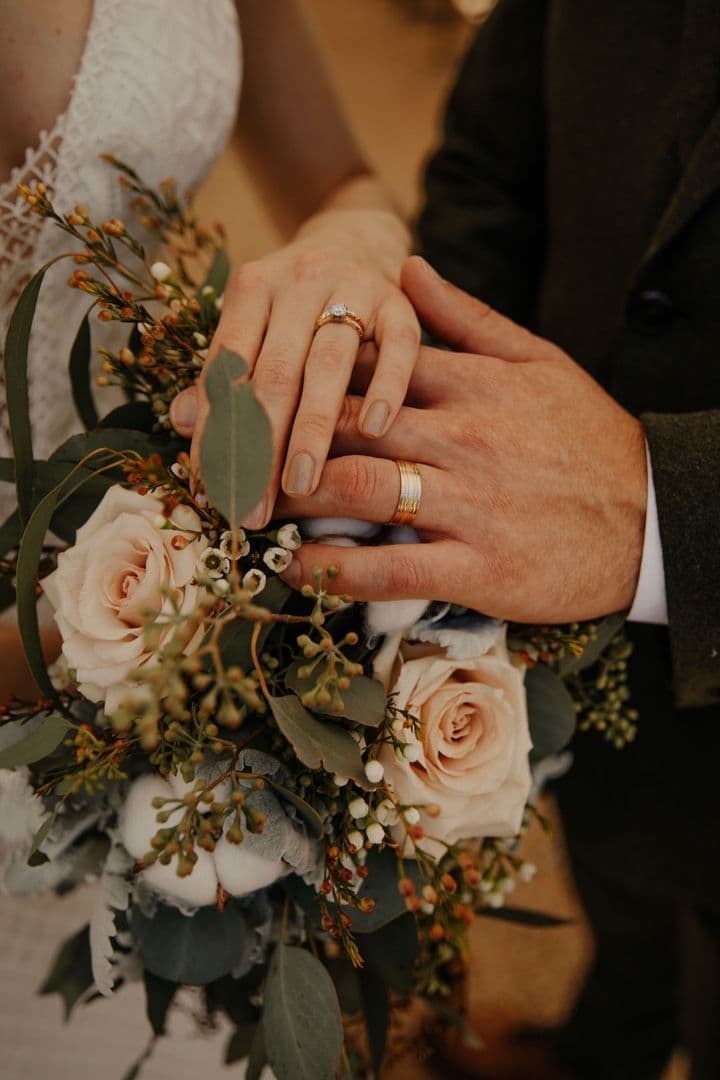
You get engaged in October. By the first week of November you've toured three venues, fallen hard for one, and the coordinator says the date you want is "getting attention." You sign that afternoon. The deposit is $3,400, charged to your card before you walk back to the parking lot.
You have not compared a single caterer. You have not talked to a florist. You haven't built a budget spreadsheet yet, because in your head, planning hasn't started.
But the money has already started.
The budget conversation usually starts with venues and caterers. But four real costs land before any of that: the ring, the venue deposit, save the dates, and engagement photos. None of them feel like "wedding vendors." All of them come out of the same pool of money you're about to spend on wedding vendors. Knowing these four upfront means you can set a real starting number before you open a single inquiry form.
01. the engagement ring
Most couples spend 3-6% of their total wedding budget on the ring, and almost nobody counts it. It's bought before the proposal, often by one person, sometimes months ahead, and it lives in a mental category called "romance" instead of "line item."
That's fine emotionally. It's a problem mathematically.
If your all-in number is $40,000, 3-6% is roughly $1,200-2,400 of it already committed. If you're working toward $60,000, the same percentage is $1,800-3,600. That money is gone before you've asked a single vendor for a quote, which means your real remaining budget is lower than the number you keep saying out loud.
Two things to do here, and they take about ten minutes:
- Write the actual ring spend down somewhere, even approximately. If one partner bought it privately and wants to keep the exact figure private, a range is enough.
- Decide whether it counts against the wedding budget or sits outside it. Either answer is valid. What isn't valid is leaving it undecided, because then it quietly counts against everything.
The couples who get surprised at month eight are almost always the couples who never assigned the ring to a column.
don't forget the ring's small follow-on costs
Resizing, insurance riders, and appraisals aren't headline numbers, but they show up in the same first two months. Ring insurance is typically an add-on to a renter's or homeowner's policy and is usually modest, but "modest" times four unbudgeted items is how a budget starts drifting.
02. the venue deposit
This is the one that actually hurts.
The venue deposit is typically 25-50% of the venue total, due the day you sign to hold the date. Not net-30. Not "before the wedding." The same day, usually while you're sitting in the office with a pen in your hand and a coordinator telling you another couple is looking at your Saturday.
That's often $2,000-6,000 out before you've compared a single other vendor.
Here's why the timing matters more than the amount. A venue deposit is the first large payment in the entire process, and it lands at the exact moment you have the least information. You don't yet know what your caterer will quote. You don't know if the venue's required bar minimum is reasonable or brutal. You don't know whether your photographer's travel fee applies to that location. You're making the single biggest commitment on the least data.
And venue deposits are generally the least refundable money in wedding planning. Most are explicitly non-refundable, which means if your plans change (a family situation, a relocation, a date shift), that $2,000-6,000 is a sunk cost, not a rollback.
what to ask before you hand over the deposit
- What exact percentage of the total is this deposit, and what's the full payment schedule after it?
- Is any portion refundable, and under what conditions? Get it in writing, not verbally.
- If we move the date, does the deposit transfer, and is there a change fee?
- What's included in the venue total this percentage is based on (tables, chairs, linens, staffing, setup, breakdown)?
- Are there required vendors or minimums that will raise my real venue cost above this quoted total?
That last one matters most. A venue that quotes $12,000 with a $4,000 required bar minimum and mandatory in-house catering is not a $12,000 venue. If you deposit against the smaller number, you'll be recalculating your entire budget in February. More on how these show up in our hidden costs posts.
03. save the dates
Design, print, postage... $150-400 before invites even exist.
Save the dates feel like a small errand. They're not a small errand, they're the first half of a two-part stationery spend, and most couples budget once for "invitations" and get billed twice.
The $150-400 range covers three things people forget to add together:
- Design. Templates are cheap or free. Custom design or a semi-custom suite adds real cost.
- Print. Cardstock weight, quantity, and any finish (foil, deckled edges, printed envelopes) move this number fast.
- Postage. This is the line that gets ignored. Postage scales with your guest count, and oversized or square save the dates can trigger higher rates than standard letters.
If you're sending 100 save the dates, postage alone is a meaningful chunk of that $150-400 total before a single card is printed.
a small decision that saves real money
Order save the dates and invitations from the same source at the same time if the design is settled. Many stationers price better at combined volume, and you avoid paying two setup or proofing fees. If your design isn't settled, don't force it, but do ask the question.
Also: send save the dates only to people who are definitely invited. Every save the date is a guest you cannot cut later, and each guest you cannot cut is a per-head catering cost you've quietly locked in. That's the most expensive stationery mistake there is, and it costs far more than the cards.
04. engagement photos
Most photographers charge $300-900 separately from the wedding package.
Some bundle it. Many don't. The ones who bundle it often bundle it into a higher tier, which means you're paying for it either way, just less visibly. Either arrangement is fine, but you need to know which one you signed.
Engagement photos also tend to pull extra spend with them, and this is where the $300-900 turns into more:
- An outfit (or two, if you're doing a location change)
- Hair and makeup for the shoot
- Travel or a location or park permit fee
- Prints, an album, or digital file upgrades
- The save the date printing you're now doing because you have the photos
That last one is funny in hindsight. Engagement photos and save the dates are the two pre-planning costs that feed each other, which is why they so often land in the same month.
Ask your photographer directly: is the engagement session included in this package, or is it an add-on, and at what price? Then ask whether the session includes edited digitals and how many. "Included session" sometimes means the shooting time and not the full gallery.
red flags to watch for in these first four costs
These are the pressure points where pre-planning money goes sideways:
- "This rate is only good today." Real venues hold real dates. Genuine urgency exists in peak season, but a deposit demanded before you've read the contract is a pressure tactic, not a scheduling reality.
- A deposit percentage that isn't written down. If the contract says "deposit" without a number or a percentage, stop. You need the figure and the schedule for the remaining balance.
- "Non-refundable" with no date-change clause. Ask what happens if you move the date by a few months. A venue willing to transfer a deposit once is telling you something good about how they operate.
- Package tiers that don't itemize the engagement session. If you can't tell whether the $300-900 is in there, you'll find out when you get the invoice.
- Save the dates ordered before your venue contract is signed. Print is the one thing you cannot un-send. Wait for the signature.
- A budget that starts at the venue. If your spreadsheet's first row is the venue, you've already excluded the ring, and likely the photos and stationery too.
put a real starting number on paper
The point isn't that these four costs are avoidable. Mostly they aren't, and most couples wouldn't want to skip the ring or the engagement session. The point is that they hit your account before a vendor is booked, and a budget built after they land is a budget built on a number that was never true.
Add them up for yourself before you send a single inquiry:
- Ring: 3-6% of your total budget, written down as an actual dollar figure.
- Venue deposit: assume 25-50% of the venue total due at signing, often $2,000-6,000 out the door.
- Save the dates: $150-400 including design, print, and postage, scaled to your guest list.
- Engagement photos: $300-900 if they're not bundled into your photography package, plus the outfit and hair and makeup you'll actually buy.
- Then subtract that total from your all-in number, and start comparing vendors against what's left.
Track every quote before you commit, including these four. You can add your quotes free and keep every number in one place from day one instead of reconstructing it in month six. And if you want to go deeper on how deposits and payment schedules get written, start with our contracts coverage before you sign anything.
Save this for the couple who thinks planning hasn't started yet. It has.
Frequently asked questions
- How much is a typical wedding venue deposit?
- A venue deposit is typically 25-50% of the venue total, and it's usually due the same day you sign to hold your date. In practice that's often $2,000-6,000 out the door before you've compared a single other vendor. The exact percentage varies by venue, region, and how far out your date is, so ask for the specific figure and the full payment schedule in writing before you sign. Also confirm whether any portion is refundable and whether the deposit transfers if you change your date.
- Should the engagement ring count as part of the wedding budget?
- Either answer works, as long as you pick one. Most couples spend 3-6% of their total wedding budget on the ring, and most never log it anywhere. If your all-in number is $40,000, that's roughly $1,200-2,400 already committed before planning opens. Decide early whether the ring sits inside the budget or outside it, then write the figure (or a range) down. Leaving it undecided is the problem, because an unassigned cost quietly counts against every other category instead of one.
- Are engagement photos included in a wedding photography package?
- Sometimes, but not reliably. Most photographers charge $300-900 separately from the wedding package, and the ones who do include a session often fold it into a higher-priced tier, so you're paying for it either way. Ask directly whether the engagement session is included or an add-on, at what price, and how many edited digital images come with it. An "included session" occasionally covers the shooting time only, not the full gallery. Budget for the outfit, hair and makeup, and any location or permit fees too.
- How much do save the dates cost?
- Plan on $150-400 covering design, print, and postage, before invitations even exist. Postage is the line most couples forget, and it scales directly with guest count, so 100 save the dates costs meaningfully more to mail than 50. Oversized or square cards can also trigger higher postage rates than standard letters. Two ways to save: order save the dates and invitations together if your design is settled, and only send save the dates to people you are certain you're inviting, since each one locks in a per-head catering cost.
- When should I send save the dates?
- After your venue contract is signed, not before. Print is the one thing you cannot un-send, so waiting for the signature protects you from reprinting an entire batch if the date shifts. Beyond timing, be deliberate about the list. Every save the date is a guest you can't cut later, and every guest you can't cut is catering and bar spend you've committed to before you've even quoted a caterer. Keep the first round tight and add names to the invitation list later if your budget allows.