6 Hidden Wedding Costs That Scale With Your Guest Count
Your guest count is a multiplier, not a headcount. Here are 6 hidden wedding costs that scale with every name you add, plus how to model the real number.
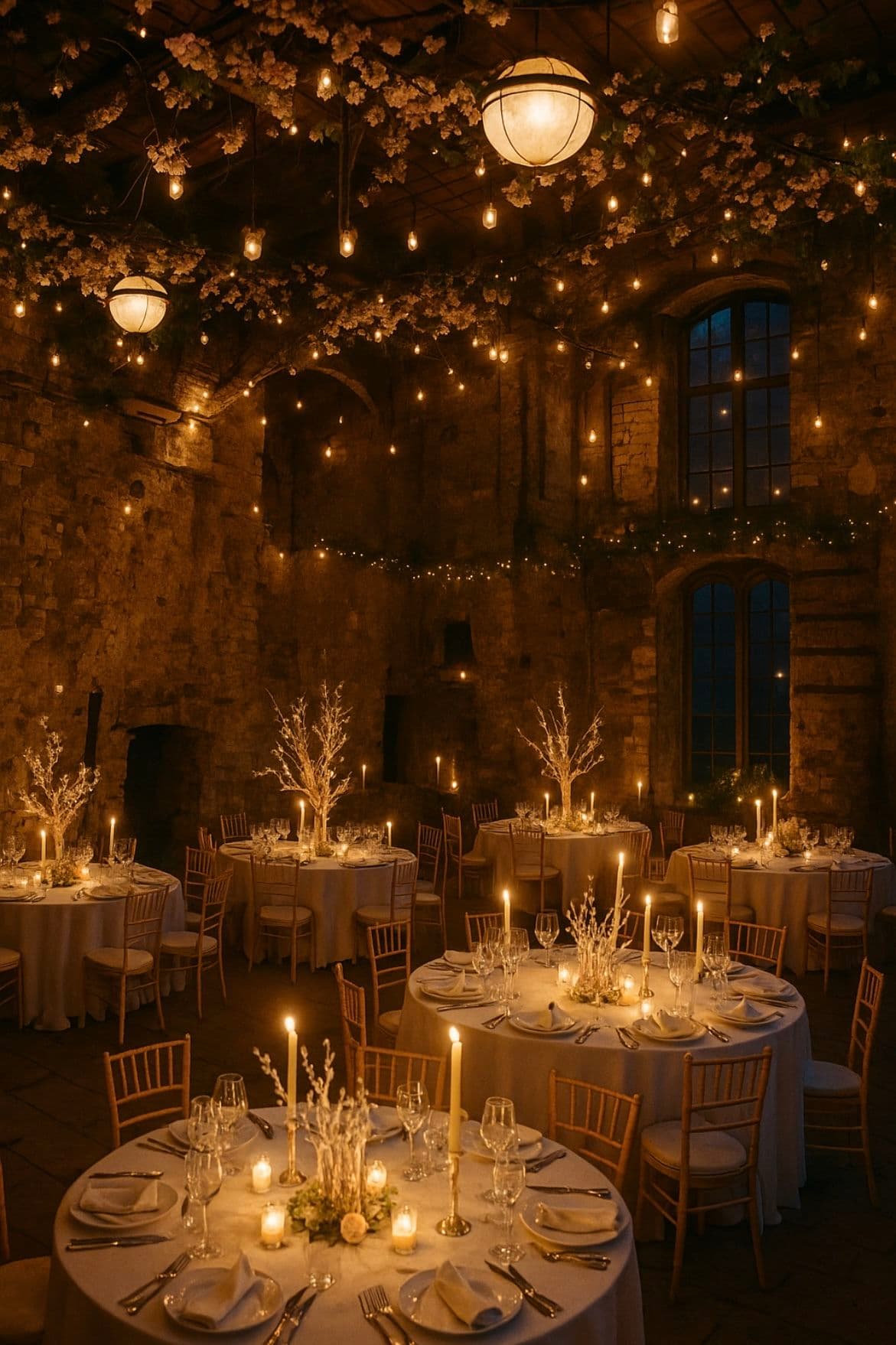
A couple sits down with a spreadsheet and a venue quote. The venue holds 200. They love it. They pencil in 180 guests because that is roughly who they want there, and they move on to the fun part: picking a photographer, arguing about the band.
Three weeks later the catering quote lands. Then the bar package. Then the rental invoice for chairs and linens. And the total is thousands of dollars higher than the number they had in their head, not because anyone overcharged them, but because they were thinking about the guest list as a headcount when it was actually a multiplier.
That is the trap. Your guest count is not just a number of people who will hug you at the end of the night. It is attached to almost every line of your budget, and it pulls on six of them at the same time. Add one name and you are not adding one cost. You are adding to catering, bar, stationery, favors, florals, and seat rentals all at once.
Here is exactly which six line items grow with your list, with real numbers, so you can model the true cost of a guest before you commit to a venue capacity you cannot actually afford to fill.
why guest count is a multiplier, not a line item
Most fixed costs in a wedding do not care how many people show up. Your photographer charges the same for 80 guests or 180. Your officiant, your dress, your DJ, your day-of coordinator: these are largely flat. You could cut your guest list in half and these numbers would barely move.
The six costs below are different. They are priced per person or per table or per seat, which means they compound. This is why couples so often catch the problem after the quotes come in and the total is already shocking. Each individual per-head price looks small and reasonable on its own. It is the stacking that gets you.
Think of it this way: every name you add triggers six invoices, not one. Once you see it that way, "should we invite my dad's coworkers" stops being an etiquette question and starts being a budget question with a dollar figure attached.
the six costs that scale
01. per-head catering
Catering is the big one, and it is almost always priced per plate. Expect an average of $85 to $150 per guest, and that is before the service charge even touches it. Service charges commonly run 18 to 24 percent, which means the sticker price per head is not the real price per head.
Run the math on the top of that range. At $150 per person for 180 guests, you are at $27,000 in food alone. Add a 22 percent service charge and you clear $32,000. Drop the list to 150 and you save roughly $6,600 before the service charge, more once you factor it in. That is a real photographer, or a honeymoon flight, hiding inside 30 names.
02. bar package
Here is the one couples misread most often. Bar packages are priced per head, not per bottle. You are paying $35 to $85 per person for the right to drink, whether or not your great aunt has a single glass of wine.
That distinction matters. People assume the bar scales with consumption, so they think a lighter-drinking crowd saves money. It usually does not, because you are charged by headcount. At $60 per person for 180 guests that is $10,800 for the bar, full stop, regardless of who actually drinks. If you want to control this cost, the lever is the guest list or the package tier, not how much anyone pours.
03. stationery
Stationery feels small until you remember it happens in stages. You are looking at $4 to $12 per invite set, and more guests means more print runs across save the dates, invitations, and day-of paper like menus and programs.
The hidden part is that stationery is priced by household, but the day-of paper is often priced by head. So the same 180-person list might mean 90 invitation suites and 180 menus. The per-piece cost is low, which is exactly why it slips past people. It is death by a thousand small charges rather than one big invoice.
04. guest favors
Favors are the clearest illustration of the multiplier problem, because the per-item cost sounds trivial. Even $5 a favor hits $750 for 150 guests. Bump the list to 180 and that same $5 favor is $900. Choose a slightly nicer $9 favor for 180 guests and you are at $1,620 for something many guests will leave on the table.
None of these numbers feel like much in isolation. That is the point. A five dollar candle is nothing. Five dollars times your entire guest list is a line item.
05. table florals
Florals scale a little differently: they scale with tables, and tables scale with guests. More guests means more tables, and each table needs a centerpiece at $150 to $400 each.
If you seat 8 per table, 180 guests is roughly 23 tables. At the low end of $150 each that is about $3,450. At $400 each you are near $9,200, and that is centerpieces only, before ceremony arrangements, bouquets, or installations. Cut to 150 guests and you drop two or three tables, which quietly saves several hundred to over a thousand dollars depending on your florist.
06. seat rentals
The last one is the least glamorous and the easiest to forget. Every guest needs a chair, a linen, and a place setting, and rentals run $25 to $60 per seat once you add it all up.
At $40 per seat for 180 guests, that is $7,200 in rentals for objects your guests will barely notice. This is often bundled into a vague "rentals" line in early planning, which is how it ambushes people later. Chairs, linens, and place settings are per-seat, so they move in lockstep with your list.
what a single guest actually costs
Stack the low end and the high end of all six and you get the true cost of adding one name:
- Catering: $85 to $150 (plus service charge)
- Bar: $35 to $85
- Stationery: $4 to $12
- Favors: around $5 to $10
- Table florals: roughly $20 to $50 per guest once you divide centerpieces across seats
- Seat rentals: $25 to $60
Added up, one guest realistically costs somewhere between $175 and $360 all in, before the service charge on catering. That means the difference between a 150-person and a 180-person wedding is not "30 more chairs." It is roughly $5,000 to $10,000. That is the number to hold in your head when the guest list negotiations start.
red flags to watch for
A few things reliably blow up the budget, and all of them are avoidable if you know to look:
- A per-head catering quote that hides the service charge. If the proposal shows $110 per person and does not spell out the service charge, your real number is closer to $135. Always ask for the total with service charge and tax included.
- A venue capacity that becomes a target. A room that holds 200 quietly encourages you to invite 200. Capacity is a ceiling, not a goal. Pick your number first, then find a venue that fits it.
- "Rentals included" with no itemized list. Included how? Chairs but not linens? Standard linens but not the ones you actually want? Vague inclusions are where the $25 to $60 per seat sneaks back in as an upgrade fee.
- Bar packages you assume scale with drinking. They scale with headcount. A dry-ish crowd does not save you money on a per-person package.
- Favor and stationery counts based on invites, not attendance. You often pay for the full invited list, not the RSVP yes list, so padding the invitation count costs real money even from people who decline.
For more on reading a proposal before you sign, our contracts posts are worth a look, and the rest of our hidden costs library breaks down the fees couples find too late.
how to model the real number before you book
The whole point of knowing these six costs is that you can model the real total before you commit to a venue capacity, instead of reacting to it after the quotes arrive.
- Set your guest count first, before you fall in love with a room.
- Multiply that count against all six per-head ranges, low end and high end, to get a realistic band.
- Add the catering service charge (assume 20 to 24 percent) on top of the food number specifically.
- Test the swing: rerun the math at 20 or 30 fewer guests and see what it frees up.
- Only then compare venue quotes, so capacity is a decision, not a default.
If you want to skip the spreadsheet, drop your own quotes into Altared and see exactly how these costs are stacking up across your vendors. You can get started free at altared.app and watch the six line items move as your list changes.
the short version
- Six costs scale with your guest list: catering, bar, stationery, favors, table florals, and seat rentals.
- Catering runs $85 to $150 per person before the service charge, and bar packages are $35 to $85 per head, billed by headcount, not by bottle.
- Small per-item costs stack fast. Even a $5 favor hits $750 for 150 guests.
- One guest realistically costs $175 to $360 all in, so 30 names is often a $5,000 to $10,000 swing.
- Watch for hidden service charges, capacity-as-target, vague "rentals included" lines, and per-head bar packages.
- Model the real number before you book, not after the quotes shock you.
Frequently asked questions
- How much does one wedding guest actually cost?
- Once you stack all six costs that scale with your list, one guest realistically runs $175 to $360 all in, before the service charge on catering. That covers per-head catering ($85 to $150), bar ($35 to $85), stationery ($4 to $12), favors (around $5 to $10), a share of table florals, and seat rentals ($25 to $60). This is why cutting 30 names often saves $5,000 to $10,000. The individual numbers look small, but they compound because every name you add triggers all six line items at the same time, not just one.
- Do wedding bar packages really cost the same no matter how much people drink?
- Usually, yes. Most bar packages are priced per person, not per bottle, so you pay $35 to $85 per head whether or not a given guest drinks. A lighter-drinking crowd does not save you money on a per-person package. If you want to control bar spending, your real levers are the guest count and the package tier (beer and wine versus full open bar), not how much anyone actually consumes. Some couples switch to consumption-based or limited bars specifically to break this per-head pricing, so ask your venue what options exist.
- Why is my catering quote higher than the per-person price I was quoted?
- Because the per-plate price is almost never the real price. Catering runs $85 to $150 per guest before the service charge even touches it, and service charges commonly add 18 to 24 percent on top. A $110 per person quote can land closer to $135 once the service charge applies. Always ask for the total including service charge and tax so you are comparing real numbers. This single line is the most common reason a budget comes in thousands over what the couple originally penciled in.
- Should I choose my venue or my guest count first?
- Your guest count first, almost always. A venue capacity of 200 quietly encourages you to invite 200, so the room ends up setting your budget instead of you. Decide your number, run it against the six per-head costs to get a realistic total, then shop for a venue that fits that number. Treat capacity as a ceiling, not a goal. Modeling the total before you commit means you never get surprised by a catering, bar, or rental invoice that assumes you are filling the room.