5 Wedding Invoice Line Items You Can Actually Negotiate
these five wedding invoice line items show up on almost every vendor contract, and all five have room to move. here's how couples save $500 to $2,000.
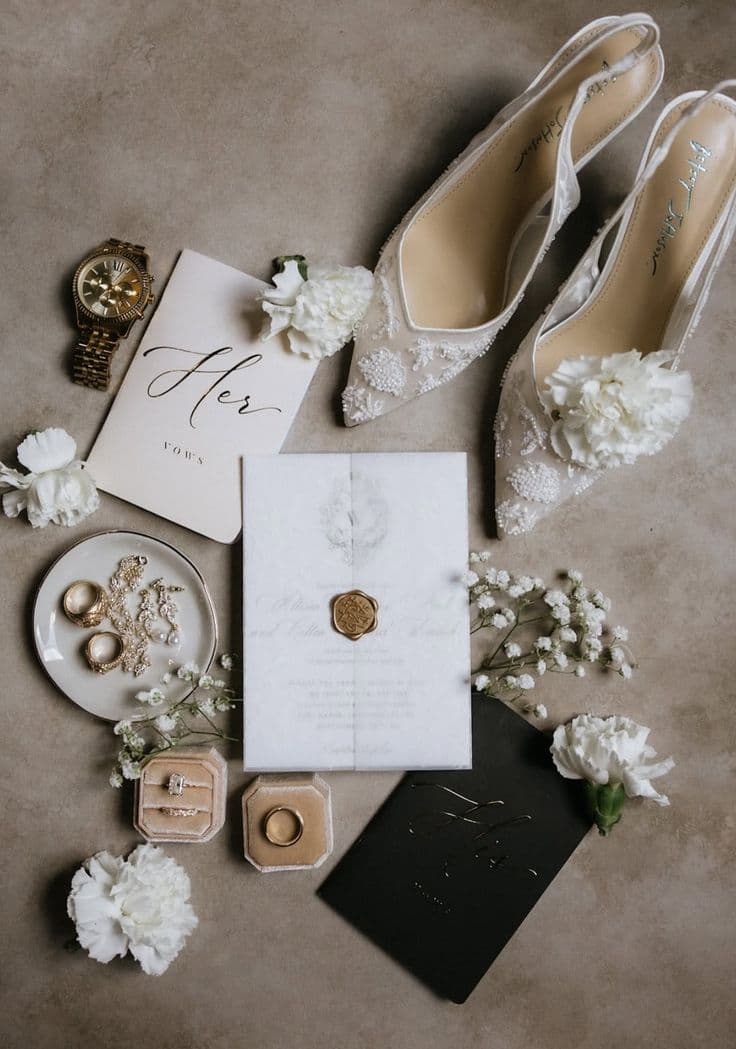
your photographer just emailed the contract. it's four pages, the deposit is due friday, and somewhere on page three there's a line that says "second shooter: $650" and another that says "album upgrade: $1,200." you assumed those were fixed prices, like a menu. so you grab your card and get ready to sign.
stop for a second. most of those numbers are softer than they look.
most vendors expect some back-and-forth. they just don't advertise it. the service charge, the second shooter add-on, the travel fee, a rush charge when you're booking a year out, and the album upgrade at signing: these five show up on almost every invoice, and all five have room to move. asking once, politely, before you countersign, is how couples routinely save $500 to $2,000 without changing a single thing about their wedding day.
you're not being difficult. you're being the person who actually read the contract. here's what to look for and exactly what to ask.
why these five, and not the rest
a wedding invoice is a mix of two kinds of numbers: hard costs and padding. hard costs are things the vendor genuinely pays out, like the rental of a venue's tables or the plated entrée your caterer is buying ingredients for. those don't budge much, and pushing on them usually just annoys people.
the five below are different. they're either percentage markups (where the percentage is a choice, not a law), optional add-ons (where the add-on price was set high enough to leave wiggle room), or fees that exist mostly to cover a vendor's worst-case scenario (and your booking might not be a worst-case at all). that's why these are where the real money lives.
before you start, do one thing: get every quote in front of you side by side. when you can see that one photographer charges $650 for a second shooter and another charges $400, you're not negotiating on a feeling, you're negotiating on data. you can drop your quotes into altared.app free and compare them line by line before any vendor call. more on that in our contracts coverage.
01. the service charge
this is the big one, and it hides in plain sight on catering and venue invoices.
18 to 22% is standard. it's the floor, not the ceiling, and a lot of couples read it as a tip when it's actually a markup that goes to the business, not the staff. (gratuity is often a separate line, which is its own conversation.)
here's the move: 15% gets accepted more than you'd think. on a $20,000 catering bill, the difference between a 20% service charge and a 15% one is $1,000. that is a real number. that's a honeymoon dinner, or your entire floral budget at a small wedding.
how to ask: "i noticed the service charge is listed at 20%. is there any flexibility to bring that closer to 15%, especially since we're booking the full package?" you are not demanding. you're opening a door.
what affects your odds
- booking in their slow season (think january, or a sunday)
- a higher total spend, which gives them margin to flex
- bundling multiple services with the same vendor
- being an easy, organized client who isn't asking for fifteen revisions
02. the second shooter
a second photographer is often a $400 to $800 add-on. sometimes you genuinely want it (big guest count, separate getting-ready locations, a church-then-reception sprint across town). sometimes it's been quietly defaulted into your package and you never asked for it.
two ways to play this. first, decide whether you actually need it. a 90-guest wedding in one venue with a relaxed timeline often does fine with one experienced shooter. second, if you do want it, ask if it drops with a shorter day rate. a second shooter who comes for the ceremony and first three hours of the reception, instead of the full ten-hour day, can cost meaningfully less.
the script: "do you offer a partial-day rate for the second shooter? we mostly want the extra coverage during the ceremony and first dances."
03. the travel fee
mileage rates vary widely, and that's exactly why this line is negotiable. one vendor charges a flat $150. another charges per mile and it balloons to $600 because they're calculating round trips for two people across three pre-wedding meetings.
a $200 cap is a fair ask. you're not asking them to eat their gas money. you're asking to put a reasonable ceiling on a number that's otherwise open-ended.
the script: "would you be open to capping the travel fee at $200? we're happy to cover travel, we'd just like a fixed number we can budget around."
watch for travel fees that quietly include the vendor's hotel night, meals, or a "per person" multiplier when there are two crew members. those add up fast, and they're often where the padding lives.
04. the rush fee
this one is almost free money, and most couples don't even know it's negotiable.
a rush fee exists to compensate a vendor for a tight turnaround: an invitation suite needed in three weeks, a video edited in ten days, a last-minute booking. if you're booked 12+ months out, there is no rush. ask them to waive it entirely.
the script is short: "i see a rush fee on the quote. since we're booking more than a year ahead, would you be able to remove that?" nine times out of ten the answer is yes, because the fee was a template line that didn't get adjusted for your timeline.
red flag: if a vendor refuses to remove a rush fee on a booking that's a year out, ask them to explain what specifically is being rushed. a real answer is fine. a vague one means it's padding, and you should weigh that against your other quotes.
05. the album upgrade
photographers add $500 to $1,500 here, and the timing of the offer matters more than couples realize.
the upgrade pitch often comes twice. once at booking, and again after the wedding when you've seen the gorgeous photos and you're emotional and you'll say yes to almost anything. the second time is when you pay the most.
bundle it at booking for less. when you commit to the album upfront, before you've fallen in love with the gallery, you have leverage you'll never have again. vendors would rather lock in the album sale now than chase it later, so they'll often discount it.
the script: "if we add the album to the package now, at booking, can you do better than the $1,200 list price?"
the negotiation order that works
handle these in roughly this sequence on a vendor call:
- confirm what's actually included so you're not negotiating against your own assumptions
- ask about the service charge or biggest percentage line first, while the conversation is fresh
- raise the add-ons you don't need (sometimes the answer is "remove it," not "discount it")
- ask to cap or waive the open-ended fees (travel, rush)
- bundle the upgrades you do want, last, as your "if we're booking today" sweetener
red flags to watch for
negotiating is normal. these signals mean slow down:
- a vendor who won't itemize the invoice at all, only a single lump sum. you can't negotiate what you can't see
- "this price is only good if you sign today." real businesses hold a quote for at least a few days
- fees that reappear under new names after you ask about them
- a rush fee on a booking a year out with no explanation
- a service charge described as a "tip" when the contract says it goes to the company
a vendor pushing back politely on one item is fine. a vendor who gets defensive about you reading the contract is telling you something about the next 12 months of working together.
a quick word on tone
you can ask for all five of these and still be a delight to work with. the couples who save the most aren't the pushiest, they're the most organized. they ask once, in writing or on a call, before they countersign. they say thank you. they come to the conversation knowing what comparable vendors charge, which is the single biggest reason a vendor says yes.
that's the part you can prep. pull your quotes together, line them up, and find every one of these items in your own numbers. you can do that free at altared.app, drop a quote in and compare line by line before you negotiate.
save this before you sign
the five negotiable line items, one more time:
- service charge — 18 to 22% is standard, 15% gets accepted more than you'd think
- second shooter — a $400 to $800 add-on, ask if it drops with a shorter day rate
- travel fee — mileage varies widely, a $200 cap is a fair ask
- rush fee — booked 12+ months out, ask them to waive it entirely
- album upgrade — photographers add $500 to $1,500, bundle it at booking for less
ask once, politely, before you countersign. that's how couples save $500 to $2,000 without changing a single thing about the wedding day. and send this to the friend who just got engaged and has no idea what half these line items even mean.
Frequently asked questions
- is it rude to negotiate a wedding vendor's invoice?
- no. most vendors expect some back-and-forth, they just don't advertise it. asking about a line item once, politely, before you countersign is completely normal in the industry. you're not being difficult, you're being the person who read the contract. the couples who save the most aren't pushy, they're organized: they know what comparable vendors charge and they ask clearly and respectfully. say thank you, keep it brief, and treat it as a conversation rather than a demand. a good vendor won't be offended that you asked.
- how much can I realistically save by negotiating these five items?
- couples routinely save $500 to $2,000 across these five line items without changing anything about their wedding day. where you land depends on your total spend and which items apply. on a $20,000 catering bill, dropping the service charge from 20% to 15% alone is $1,000. waiving a rush fee, capping a travel fee at $200, and bundling an album at booking can add several hundred more. the savings are biggest when you're booking in slow season or spending enough to give the vendor room to flex.
- what's the difference between a service charge and a tip?
- they're often two different lines, and that trips a lot of couples up. the service charge (usually 18 to 22%) is a markup that goes to the business, not necessarily to the staff. gratuity is the money intended for the people actually working your event. always ask your caterer or venue which is which, because some couples accidentally tip on top of a service charge they assumed already covered it. clarifying this can also reveal whether the service charge has any room to come down toward 15%.
- when is the best time to negotiate the album upgrade?
- at booking, not after the wedding. photographers add $500 to $1,500 for album upgrades, and the pitch often comes twice: once when you sign, and again after you've seen the gallery and you're emotional. the second time is when you pay the most. if you know you want a physical album, bundle it into the package upfront. vendors would rather lock in the sale now than chase it later, so they'll frequently discount it when you commit early.
- how do I know if a fee is actually negotiable or just a hard cost?
- look at what kind of number it is. hard costs (ingredients, rentals the vendor pays for) don't move much. percentage markups, optional add-ons, and worst-case fees do. the fastest way to tell is to compare quotes side by side: if one photographer charges $400 for a second shooter and another charges $800, the price was clearly a choice. drop your quotes into altared.app to compare line by line, and any number that varies widely between vendors is fair game to ask about.