The Wedding Tip Line Nobody Budgets For (and It Adds Up Fast)
Wedding tips aren't optional, they're expected. Set aside $800–$2,000 in cash envelopes for the day itself, and learn exactly who to tip and how much.
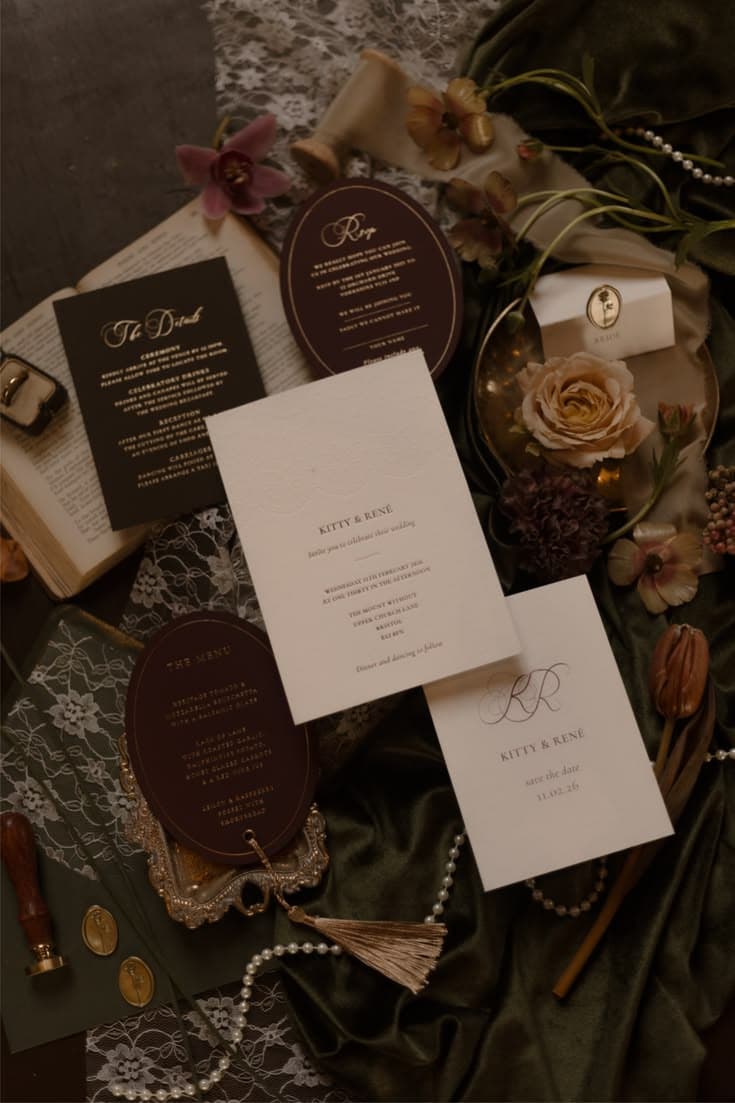
Picture the morning of the wedding. The venue deposit cleared months ago. The photographer is booked, the caterer signed, the band confirmed. You are getting your hair done, someone hands you a coffee, and then your coordinator leans over and asks, quietly, "Do you have the tip envelopes ready?"
And you freeze. Because no one told you about the tip envelopes.
This is the line nobody puts in their budget. You've got the venue deposit handled, the photographer booked, the caterer signed. But did anyone tell you to set aside $800 to $2,000 in cash envelopes for the day itself? Probably not, because it never shows up on a single contract. It just lands, all at once, on the one day you have the least attention to spare.
Why tipping catches almost everyone off guard
Tipping at weddings isn't optional. It's expected, and it lands all at once. That combination is what makes it dangerous for your budget.
Every other big cost has a paper trail. The venue sends an invoice. The photographer sends a contract with a payment schedule. The caterer gives you a per-head number and a due date. You can see those coming from a mile away, and you plan for them.
Tips don't work that way. They don't appear in the original quote. There's no invoice, no due date, no reminder email. The expectation just exists, quietly, in the background of the whole industry, and it becomes real the moment your vendors show up to work.
So the couple who budgeted carefully for twelve months suddenly needs $1,500 in cash they never accounted for. That money has to come from somewhere, and by the day of the wedding, there's nothing left to trim. You can't renegotiate the caterer the morning of. The only options are scrambling for an ATM or shorting people who worked hard for you. Neither feels good.
Eight envelopes, minimum
Here's the part that surprises people most: it's not one tip. It's a stack of them.
Think about everyone touching your day. Your photographer, second shooter, caterer staff, band or DJ, hair and makeup team, day-of coordinator, florist delivery crew. That's a lot of envelopes, and nobody lists it in the original quote.
Plan on eight envelopes minimum, cash, day-of. Here's a realistic breakdown of who gets one and the range you're looking at, generally $50 to $500 each depending on the role and how they were paid.
- Photographer — often $50 to $200 if they own the business, more if you want to. Owners don't strictly need a tip, but many couples give one for standout work.
- Second shooter — $50 to $100. They worked the same long day for a fraction of the pay.
- Caterer / banquet staff — this is often the biggest line. Check your contract first, because many caterers build a service charge or gratuity in. If they don't, plan on $20 to $50 per server, which adds up fast at a big reception.
- Bartenders — $20 to $50 each, unless a tip jar or gratuity is already covered.
- Band or DJ — $50 to $150 for a DJ, and $25 to $50 per band member.
- Hair and makeup team — 15% to 20% of that service, the same way you'd tip at a salon.
- Day-of coordinator — $50 to $200. They are the person keeping the whole thing from falling apart.
- Florist delivery and setup crew — $10 to $50 for the people hauling and arranging, especially for big installs.
Add officiant, transportation drivers, and the venue's setup or cleanup crew, and you can easily push past eight. Every one of those is a separate envelope, a separate name, a separate amount you have to figure out in advance. That's how you get from "a tip" to $800 to $2,000 in one shot.
The service charge trap
Read your contracts closely before you plan a single tip, because this is where couples double-pay or feel guilted into paying twice.
A "service charge" or "administrative fee" is not the same as a gratuity, and it often does not go to the staff at all. A 20% service charge on a $10,000 catering bill is $2,000, and if you assume that covers the servers, you might skip their tips entirely, or you might tip on top without realizing you already paid a hefty fee. Neither is what you want. If the contract says "gratuity included," your staff are covered. If it says "service charge," ask the vendor point blank where that money goes and whether the team still expects a tip.
Red flags and things to watch for
A few patterns tend to blow up the tip budget or catch people at the worst possible moment. Watch for these:
- "Gratuity not included" buried in the fine print. This is the phrase that turns a $6,000 catering quote into a $7,200 real cost. Search every contract for it before you sign, not the week of.
- Vendors who only take cash tips. Most do. You cannot Venmo the banquet staff at 10pm, and the ATM at the venue may be empty or nonexistent. Get the cash days ahead.
- No one assigned to hand out envelopes. You will be busy getting married. Give the stack to your coordinator or a trusted family member with a written list of names and amounts, sealed and labeled.
- Assuming the quote is the final number. The quote covers the contract. It does not cover the line items that don't show up until the day of. A "$25,000 wedding" with tips is often a $26,500 wedding, and that gap is exactly the kind of thing that wrecks a budget you thought was locked.
- Forgetting the small crews. The florist's delivery driver, the rental drop-off team, the shuttle driver. They're easy to overlook and awkward to skip when they're standing right there.
If any of this sounds like it's sneaking up on you, it's worth reading through the other hidden costs that don't make it into the headline number either.
How to actually plan for it
The fix is simple, it just requires doing it early, while you still have room to adjust.
A worked example. Say you're planning a mid-size wedding. Your caterer contract has no gratuity, so you set aside $600 for the banquet and bar staff. Photographer and second shooter, $200. DJ, $100. Hair and makeup at 18%, roughly $130. Coordinator, $150. Florist crew, $40. Officiant, $100. That's about $1,320 in cash, right in the middle of the $800 to $2,000 range, and none of it appeared on a contract. Now imagine finding that out the night before instead of six months out.
Here's the order of operations:
- Pull every contract and search for "gratuity" and "service charge." Mark which vendors are already covered so you don't double-tip.
- List every human who works your day, including the ones not on a contract (drivers, setup crews).
- Assign a dollar amount to each using the ranges above, and total it.
- Add that total to your master budget now, as a real line item, not a maybe.
- Get the cash a few days early, split it into labeled envelopes, and hand the stack to your coordinator with a list.
The whole thing takes an afternoon, and it moves the tip line from a day-of ambush to a number you decided on calmly, months in advance.
This is exactly the gap Altared is built to close. Altared tracks your full running total, not just the contracts, but the line items that don't show up until the day of. You drop in your first quote and it builds the picture, so you see the real number before it's too late to adjust anything. No surprise $1,500 the morning of, no shorting people who earned it.
The short version
- Tipping isn't optional, it's expected, and it all lands on the day itself.
- Set aside $800 to $2,000 in cash for tips, on top of your contracts.
- Plan for eight envelopes minimum: photographer, second shooter, caterer staff, band or DJ, hair and makeup, coordinator, florist crew, and bartenders, at $50 to $500 each.
- Read every contract for "gratuity" versus "service charge" so you don't skip or double-pay.
- Get cash early, label the envelopes, and hand them to someone who isn't you.
You can build the full picture, tips included in the total, before the day gets anywhere near you. Try it free at altared.app, drop in your first quote, and let it show you the real number.
Frequently asked questions
- How much should I budget for wedding tips?
- Plan on $800 to $2,000 in cash, on top of everything in your contracts. The exact number depends on how many vendors you have and whether any of them already include gratuity. A mid-size wedding often lands around $1,300, with individual tips running $50 to $500 each. The most important thing is to add this as a real line item in your budget early, not the week of, because tips land all at once on the day itself and there's no room left to adjust by then.
- Who do I actually need to tip at a wedding?
- Plan for eight envelopes minimum: your photographer, second shooter, caterer or banquet staff, band or DJ, hair and makeup team, day-of coordinator, florist delivery crew, and bartenders. Depending on your setup you may also tip the officiant, shuttle drivers, and venue setup or cleanup crews. Business owners (like a solo photographer) don't strictly require a tip, but many couples give one for great work. Everyone who is hourly staff or part of a crew generally expects one.
- Do I still tip if my contract says gratuity is included?
- If the contract says gratuity is included, that staff is already covered and you don't need to tip them again. But watch the wording carefully. A service charge or administrative fee is not the same as a gratuity, and it often doesn't go to the staff at all. If you see a service charge, ask the vendor directly where that money goes and whether the team still expects a tip. Reading this before you sign prevents both double-paying and accidentally shorting people.
- Why isn't tipping listed in my vendor quotes?
- Because tips aren't a contract item, they're an expectation. Quotes cover the service being sold. Gratuity sits in the background of the whole industry and only becomes real when vendors show up to work your day. That's exactly why it catches people off guard: there's no invoice, no due date, and no reminder. The fix is to track your full running total, including the line items that don't appear until the day of, so the real number is visible while you still have time to plan for it.
- Can I tip vendors with a card or app instead of cash?
- Usually not. Most day-of tips are cash, handed over in envelopes at the event. You can't reliably Venmo the banquet staff at 10pm, and the venue may not have a working ATM. Get the cash a few days early, split it into labeled envelopes with each vendor's name and amount, and hand the whole stack to your coordinator or a trusted family member. You'll be busy getting married, so you don't want to be the one tracking down eight people to pay them.