Who Pays for What in a Second Marriage: 6 Real Rules
The old who-pays-for-what rules don't apply to a second wedding. Here are 6 real money rules for a second marriage, from venue to vendor tips.
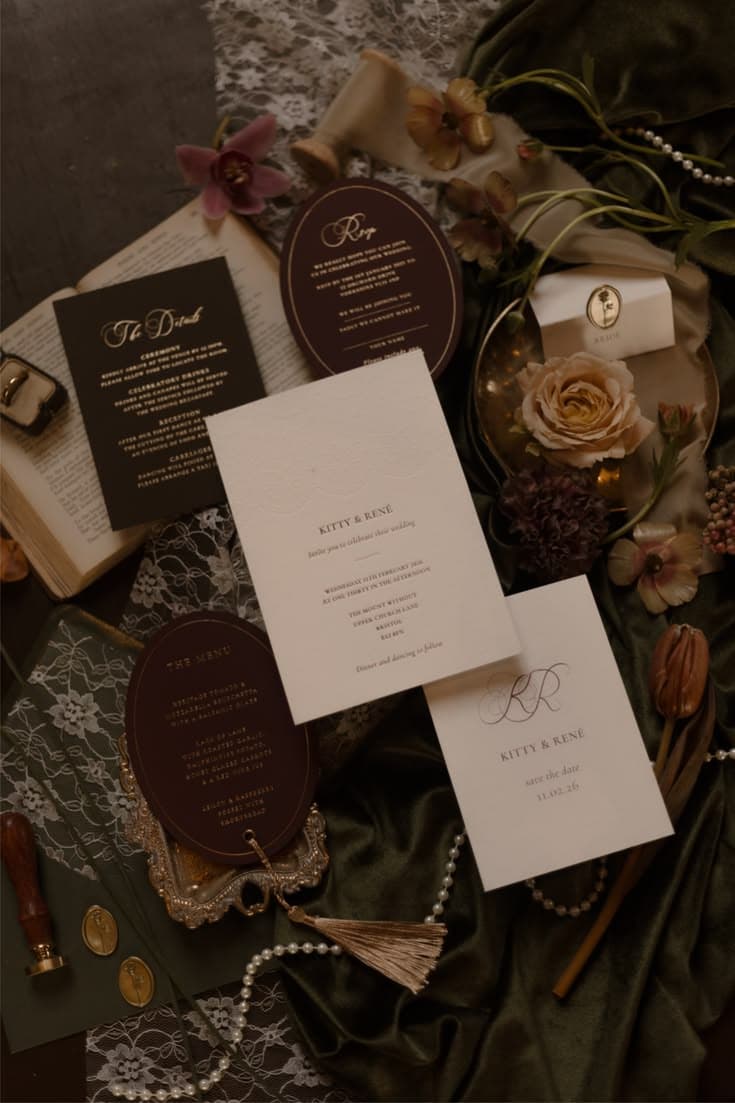
A couple I'll call Dana and Marcus booked a $9,000 venue, felt good about it, and mentally penciled in Dana's parents for "the usual" contribution the way they had the first time around. Then the check never came, and neither did the assumption behind it. Nobody was being cold. Her parents had already thrown one wedding a decade earlier, and in their heads that job was done. Dana and Marcus were suddenly $5,000 short on a plan they'd built around a rule that didn't exist anymore.
That gap is the whole problem with second weddings. The old "who pays for what" playbook was written for first weddings, for young couples, for parents who expected to foot the bill. For a second marriage, most of those rules quietly stop applying, and the gap between what you assume and what's actually true is exactly where couples overspend without realizing it.
Here are the six rules that actually apply the second time around, plus the numbers to plan against.
Rule 1: The venue is on you as a couple
Start here because it's the biggest single line and the one most likely to carry a wrong assumption. At a second marriage, the couple pays for the venue, full stop. Parents contributing is now a nice surprise, not a given.
The average venue runs $5,000 to $12,000, and that range is wide for a reason: a Saturday in peak season at a full-service space sits at the top, while a weekday, a restaurant buyout, or a smaller nontraditional space lands near the bottom. If you want the fastest way to move your total budget, this is the lever. Booking a Friday instead of a Saturday, or an off-peak month, can shift you thousands within that same $5,000 to $12,000 band.
The mindset shift matters as much as the number. When you plan a second wedding assuming you're the ones writing the venue check, you negotiate from facts instead of hope. You ask better questions. You don't over-commit on the room and then scramble on catering.
Rule 2: Attire is each person's own cost
There's no tradition that says one side covers the other's outfit, and honestly there never really was a good one. For a second marriage, keep it clean: each partner covers their own attire. Average spend is $1,500 to $3,000 each.
This is one of the easiest places to feel calm about spending or trim it, because it's entirely personal. Some people want the full look again. Some deliberately don't, and put that money toward the honeymoon or the guest experience. Both are correct. The only wrong move is treating attire as a shared budget line and then arguing about whose choices "cost more."
A quick way to keep this fair:
- Each person sets their own attire number inside the $1,500 to $3,000 range.
- You both agree those two numbers are independent and not up for comparison.
- Anything either of you saves under your own cap goes back into the shared pot, not into a bigger dress or suit by default.
That structure removes the resentment before it starts.
Rule 3: The guest list is your single strongest cost control
Second weddings average 50 to 75 guests, and that smaller number is a feature, not a compromise. It's also the single fastest way to control catering spend, because catering runs $85 to $150 per head.
Watch how quickly that compounds. At $120 per head:
- 50 guests: $6,000
- 75 guests: $9,000
- 100 guests: $12,000
That's a $6,000 swing driven entirely by the list, and it's happening on top of your venue. When something in the budget has to give, cut here first. Every name you add or remove is roughly a hundred-dollar-plus decision, and they add up fast.
A helpful reframe: a second wedding gives you social permission to keep it tight. You've already done the big-obligation guest list once. This time, the room can be the people you actually want there, which is both cheaper and better.
The plus-one and kids question
Two line items hide inside the guest count. Plus-ones for single guests and children both eat into your per-head number at the same $85 to $150 rate. Decide your policy before you send invitations, not after someone asks, because reversing it later is awkward and expensive.
Rule 4: Family gifts are optional now, not expected
This is the rule Dana and Marcus learned the hard way. At a first wedding, parents chipping in was baked into the plan. At a remarriage, parents giving cash is now optional, not expected.
When family does contribute, plan on the smaller end. The average contribution drops to $2,000 to $5,000, noticeably lower than what a first wedding might see. That's not a slight. It reflects the honest reality that many parents feel they already did the big financial lift once.
The practical takeaway: build your entire budget as if no outside money is coming. If a contribution shows up, treat it as a buffer, an upgrade, or savings. Never treat it as a load-bearing beam. A budget that only works if someone else pays isn't a budget, it's a wish.
If a parent does offer, have one specific conversation early. Ask whether it's a fixed amount or a percentage, whether it's tied to a particular thing (the venue, the catering), and when it arrives. Vague generosity is how couples end up spending money that was never actually promised.
Rule 5: Vendor tips are the cost nobody quotes you
Here's the money that doesn't show up in any quote. Budget 15 to 20 percent of each vendor's fee for tips. On a $20,000 wedding, that's $3,000 to $4,000 most couples completely miss.
Sit with that. It's not a rounding error. It's the size of a whole second budget line, sitting invisible because no invoice lists it. You get twelve clean quotes, add them up, feel organized, and then reality hands you a four-figure surprise on the day itself.
Common vendors people tip, so you can build the line correctly:
- Catering and banquet staff (often the largest single tip)
- Hair and makeup artists
- The DJ or band
- The photographer and videographer
- The delivery and setup crews
- The officiant, if not part of a house of worship
Not every vendor expects a tip, and some build gratuity into the contract, so read each one. But if you don't reserve 15 to 20 percent somewhere in the plan, you're not budgeting for the wedding you're actually having. The safest move is to add this as a real line the moment you start collecting quotes, and to check each contract for gratuity that's already included so you don't double-tip. This is the exact kind of gap our hidden costs coverage keeps flagging, because it's the one that catches even careful planners.
Rule 6: The registry still works, just point it somewhere useful
A registry is still completely fine for a second marriage. You don't have to skip it out of some sense that registries are only for first-timers. What changes is where you aim it.
Most couples at this stage already have the plates and the toaster. So lean into experience funds or home upgrades, honeymoon contributions, a renovation, the good version of something they already own. Average gift spend runs $100 to $150 per guest, and pointed at experiences that money does more emotional work than a fourth set of dish towels.
Combine this with Rule 3 and something nice happens. A 50-to-75 person guest list at $100 to $150 per gift is a meaningful cushion, and because you've kept the room intentional, more of those gifts come from people who genuinely want to invest in your life together.
Watch for these red flags
A few patterns show up again and again when second-wedding budgets go sideways:
- Copy-pasting a first-wedding budget. The categories look similar, but the assumptions underneath (parental contributions, guest count norms) are different. Start fresh.
- Counting on family money before it's confirmed in a real number. Optional means optional. Build to zero.
- Adding up quotes and calling it your total. Without the 15 to 20 percent tip line, you're understating your real cost by $3,000 to $4,000 on a $20,000 day.
- Letting the guest list creep past 75 "just to be nice." At $85 to $150 per head, niceness is expensive. Every add is a hundred-plus-dollar decision.
- Treating attire as a shared, comparable expense. It's each person's own $1,500 to $3,000. Keep the lanes separate.
If you catch yourself doing any of these, stop and re-check the numbers against reality, not against your memory of how the first one worked.
The short version
Knowing the real breakdown before you book means you negotiate from facts, not assumptions. Here's what to lock in:
- Venue: you pay as a couple, plan for $5,000 to $12,000, treat any parental help as bonus.
- Attire: each person covers their own, $1,500 to $3,000 each, separate lanes.
- Guest list: aim for 50 to 75, cut here first, every head is $85 to $150.
- Family gifts: optional now, and smaller ($2,000 to $5,000) when they happen. Build to zero.
- Vendor tips: reserve 15 to 20 percent, roughly $3,000 to $4,000 on a $20,000 day.
- Registry: still fine, point it at experiences and home upgrades at $100 to $150 per guest.
Once you've got the rules straight, put your actual quotes against them. You can get started free, drop your vendor quotes in, and track the full picture line by line, including the tip line most couples never see coming.
Frequently asked questions
- Do parents traditionally pay for a second wedding?
- No. The old rule where parents cover the wedding was written for first weddings. At a second marriage, parents contributing is a nice surprise, not a given, and many feel they already did the big financial lift the first time. When family does chip in, the average contribution drops to $2,000 to $5,000, which is noticeably lower than a first wedding. The safest approach is to build your entire budget assuming no outside money arrives. If a contribution does come, treat it as a buffer or savings, never as a line your plan depends on.
- How much should I budget for vendor tips at a second wedding?
- Budget 15 to 20 percent of each vendor's fee for tips. This is the cost that never shows up in a quote, so it's easy to miss entirely. On a $20,000 wedding, tips alone can run $3,000 to $4,000. Common recipients include catering and banquet staff, hair and makeup, the DJ or band, photographers and videographers, and setup crews. Read each contract, because some vendors already include gratuity and you don't want to double-tip. Add a dedicated tip line the moment you start collecting quotes so your total reflects the wedding you're actually having.
- How many guests should a second wedding have?
- Second weddings average 50 to 75 guests, and that smaller size is genuinely an advantage. Your guest list is the single strongest cost control you have, because catering runs $85 to $150 per head. At $120 per head, going from 50 to 100 guests swings your catering bill from $6,000 to $12,000. When your budget needs to give somewhere, cut the guest list first. A second wedding also gives you social permission to keep the room to the people you actually want there, which happens to be both cheaper and more meaningful.
- Is it okay to have a registry for a second marriage?
- Yes, a registry is completely fine for a second wedding. You don't need to skip it. What usually changes is the focus. Most couples at this stage already own the household basics, so it helps to lean into experience funds, honeymoon contributions, or home upgrades rather than another set of everyday items. Average gift spend runs $100 to $150 per guest, and aimed at experiences that money tends to do more for you. Paired with a tighter guest list, a well-pointed registry can add a meaningful cushion to your overall plan.
- How much does a second wedding actually cost?
- It varies, but you can build a realistic estimate from a few anchors. The venue typically runs $5,000 to $12,000, attire is $1,500 to $3,000 per person, and catering is $85 to $150 per head for a 50 to 75 guest list. Then add the line most couples forget: 15 to 20 percent for vendor tips, which is $3,000 to $4,000 on a $20,000 day. Build the whole thing assuming no family contribution, since parental help is optional now and averages just $2,000 to $5,000 when it happens.