Why The First Wedding Vendor You Book Decides Your Budget
The first vendor you book quietly sets your entire wedding budget. Here's why vendor order matters more than price, and how to book in the right sequence.
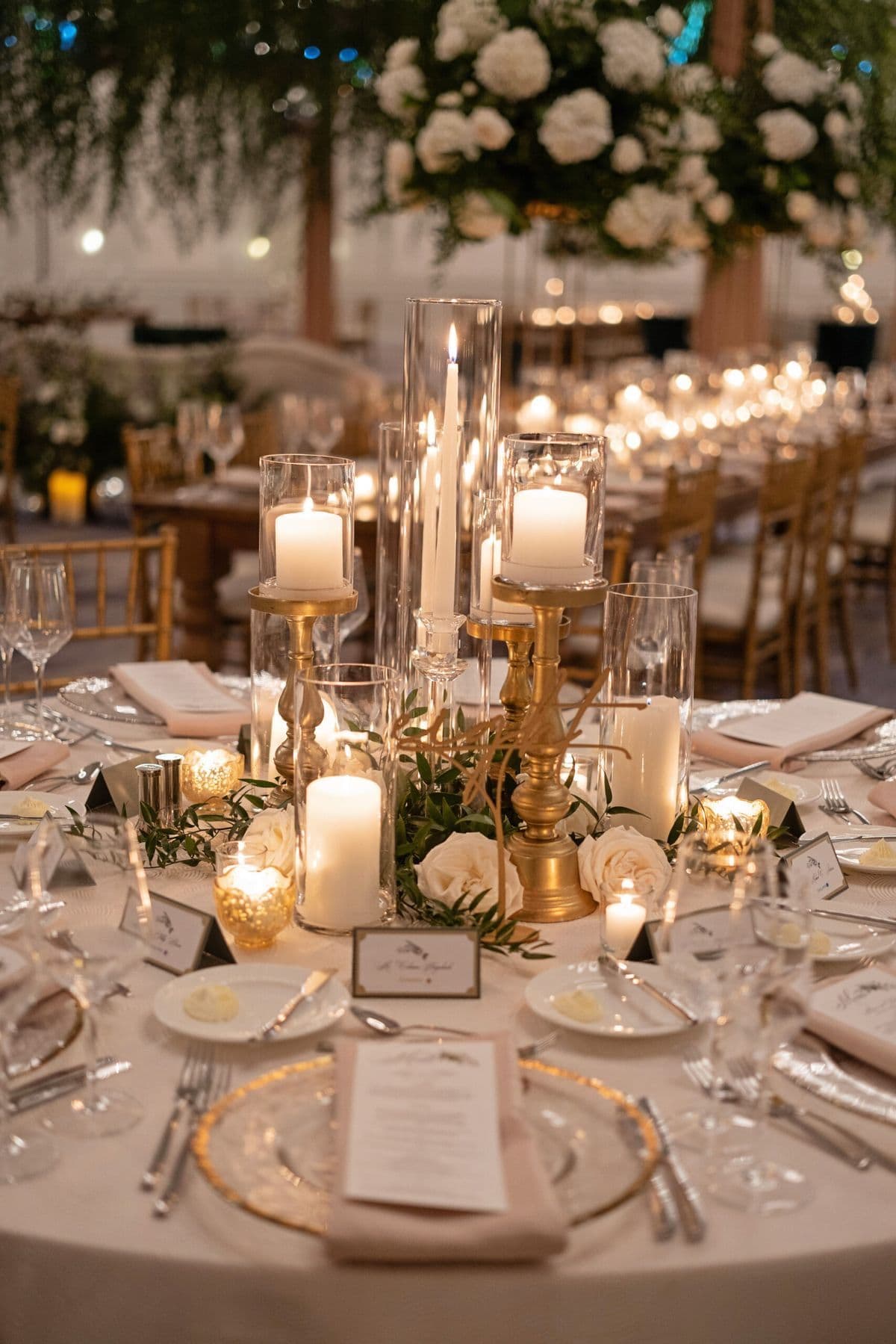
Picture this: you and your partner tour a venue on a Saturday morning. The light is good. The coordinator is charming. There's a deal if you sign by Monday. You stretch a little, sign at $6,000, and drive home feeling like the hardest part of planning is behind you.
It isn't. It's actually just starting, and you've already made the single most expensive decision of the entire process. Not because $6,000 is a lot of money (you knew that going in), but because of what that number now signals to every other vendor you're about to talk to.
The first vendor you book sets the price floor for everything else. Most couples don't realize that until they're $4,000 over budget and wondering where it went.
the anchor problem nobody warns you about
Here's what's actually happening when you book your venue first. You're not just reserving a date and a room. You're broadcasting a number. Caterers ask where you're getting married. Photographers ask. Florists, DJs, planners, rental companies, all of them ask. And they're not being shady about it. They're reading a market signal.
A $6,000 venue signals a $30k+ wedding. Vendors who work that tier price accordingly because that's the math of their business. The caterer who quotes you $85 per head at one venue might quote $110 at another, for the exact same menu. It's not gouging. It's how every service industry that does custom pricing actually works.
You sent the signal. They're responding to it.
By the time you've talked to three caterers and two photographers, your total is running $4,000 over what you planned, and you've already committed to the anchor that pulled it there. You can't adjust. Not once it's signed.
what you've been told vs. what actually happens
The standard advice goes like this:
- "book the venue first, figure out the rest."
- "you'll adjust other vendors around it."
- "deals exist at every price point."
All of that sounds reasonable. None of it survives contact with reality.
You can't adjust around a venue because the venue isn't just a line item, it's the context that prices every other line item. Deals do exist at every price point, but the "deal" version of a $9,000 venue's preferred caterer is still more expensive than a mid-tier caterer working a mid-tier venue. The price point isn't a fixed thing. It moves with your anchor.
And "figure out the rest" assumes the rest is independent of the first decision. It isn't. The rest is downstream of the first decision.
the actual mechanics: how vendors price you
Vendors don't sit down with a spreadsheet and decide to charge $6,000-venue couples more than $3,000-venue couples. It's quieter than that. A few things happen:
- Package recommendations shift. A photographer with a $2,400 base package and a $4,200 premium package will lead with the premium one if your venue suggests you're a premium-package couple.
- Add-ons get assumed. Second shooter, engagement session, full-day coverage. These get folded into the proposal because of where you're getting married, not because you asked.
- Minimums appear. Floral minimums, catering minimums, rental minimums. They flex up based on venue.
- "Preferred vendor" lists do the work for them. Most preferred vendor lists are priced for the venue's tier, not yours.
- Negotiation room shrinks. When you're already at a high-anchor venue, vendors assume your willingness to pay is high.
None of this is a conspiracy. It's just what happens when you tell people the most expensive thing about your wedding before you tell them anything else.
book small first instead
The fix isn't complicated, but it's the opposite of what every wedding magazine tells you to do.
Lock a photographer before the venue. Or a hair and makeup artist. Or a cake vendor. Something that costs less than $3,000 and locks in a date without setting a ceiling on the whole budget.
A small first booking does three things at once:
- It commits you to a date (which is actually the thing the "book venue first" advice is trying to solve).
- It builds momentum without spending anchor money.
- It lets you walk into venue tours with your remaining numbers in hand, instead of the other way around.
When you tour venues at $4,500 with a photographer already booked at $2,800, you're a different customer than the one walking in cold. You know your real number. You're not guessing at what's left. And the venue sales coordinator can feel it.
a small example of how this plays out
Say your total budget is $28,000. Two paths:
Path A: You book a $6,000 venue first. Caterer comes in at $11,200 (they assumed $10k). Photographer at $3,400 (they assumed $2,800). Flowers at $3,800. DJ at $1,800. Cake, rentals, attire, miscellaneous. You land at $32,200. Average overspend when the venue gets booked first: $4,200. Sound familiar?
Path B: You book a photographer at $2,800 first. Then a HMUA at $650. You walk into venue tours knowing you have roughly $24,500 left and a target of about $5,000 for venue. You find one. Caterer reads the room and quotes $9,400. Flowers come in at $2,900. You finish at $27,800.
Same wedding. Same vendors, broadly. Different order. $4,400 difference.
red flags to watch for
When you're early in planning, a few things should slow you down:
- A venue pressuring you to sign within 48 hours. Anchor decisions deserve anchor-level patience. Real deals don't expire that fast, and the ones that do are usually priced to hide something.
- "Preferred vendor only" requirements. Some venues require it for catering or rentals. That's fine if the pricing is competitive. Get one outside quote for the same scope before you sign, just to know what the markup looks like.
- Vendors who quote before they know your venue. Sounds counterintuitive, but a vendor who quotes blind is giving you a number they'd stand behind anywhere. That's useful.
- Package recommendations that skip the base tier. If a vendor leads with their premium package and never mentions the entry-level one, ask why. The answer is usually "your venue."
- The phrase "couples at your venue typically spend..." This is the anchor doing its work out loud. Politely ignore it.
what to actually do this week
If you're newly engaged and haven't booked anything yet, here's a reasonable order to consider:
- Set a real total budget (not aspirational, real).
- Pick a date range, not a single date. Three to four months of flexibility unlocks a lot.
- Book one small vendor first. Photographer, HMUA, or cake. Under $3,000. Lock the date.
- Build a vendor shortlist with quotes in writing, before signing anything else.
- Go venue shopping with your remaining number in mind.
- Sign the venue knowing exactly what's left for catering, flowers, music, and the rest.
If you've already booked the venue, you haven't broken anything. You just need to be more careful about how you talk to the next round of vendors. Get quotes from people outside the preferred list. Don't volunteer your venue name until you've got a baseline number. Ask for the base package first.
the point isn't to spend less, it's to spend on purpose
This isn't about being cheap. Some couples want to spend $40,000, some want to spend $12,000, both are legitimate. The point is that vendor order should serve your budget, not set it for you.
Order matters more than any single vendor. The same $28,000 wedding can feel generous or stretched depending entirely on what you booked first.
Altared lets you map out your vendor order before you book anything, compare quotes side by side, and see exactly how each decision affects what's left. If you want to see the math before you sign, start a plan. For more on this kind of thing, the budgeting blog goes deeper on cost mechanics.
quick recap
- Your first vendor sets the price floor for every vendor after it.
- A $6,000 venue signals a $30k+ wedding to the rest of the market.
- Venue-first booking has an average overspend of $4,200.
- Book something under $3,000 first to lock a date without setting a ceiling.
- Walk into venue tours with your remaining number in hand, not the other way around.
- Compare vendors before you commit, so your first booking doesn't break you.
Frequently asked questions
- Should I really not book the venue first?
- You can, but go in with eyes open. The venue isn't just a line item, it's the anchor that prices every vendor after it. A $6,000 venue signals a $30k+ wedding, and caterers, photographers, and florists quote accordingly. If you book something smaller first (a photographer, HMUA, or cake under $3,000), you lock in your date without setting a ceiling on the whole budget. Then you can venue-shop with your remaining numbers in hand. If you've already signed the venue, you haven't ruined anything, you just need to be more deliberate with the next round of quotes.
- What's a good first vendor to book?
- Anything under $3,000 that locks in a date. Photographers are the most common choice because they're date-specific, in-demand, and the good ones book out a year or more. Hair and makeup artists work too, especially if you've found someone you love. Cake vendors are another option. The goal isn't the specific category, it's a booking that commits you to a date without broadcasting a high-anchor signal to the rest of the market. Avoid leading with venue, caterer, or full-service planner, those are the three categories that set price floors hardest.
- How much do couples typically overspend when they book the venue first?
- Average overspend when the venue gets booked first is about $4,200. That's not because anyone is being dishonest, it's because every subsequent vendor reads the venue as a market signal and prices their packages, add-ons, and minimums to match. The overspend isn't one big line item, it's $400 here, $600 there, $1,200 on flowers, $800 on catering upgrades you didn't plan for. By the time you add it up, you're four grand over and already committed.
- Do vendors actually price differently based on the venue?
- Yes, though it's rarely calculated or shady. Vendors lead with package tiers that match what they think you'll buy, and your venue is the loudest signal they have. A photographer with a $2,400 base and a $4,200 premium will lead with premium if your venue suggests you're a premium customer. Floral minimums flex up. Caterers assume add-ons. Preferred vendor lists are priced for the venue's tier. None of it is unethical, it's just how custom-pricing service industries work. Knowing it happens is most of the defense.
- What if I've already booked my venue?
- You're fine, just be more careful from here. Get quotes from vendors outside the preferred list to see what the baseline market rate looks like. Don't volunteer your venue name in the first email, ask for a base package quote against your guest count and date first. Ask specifically about the entry-level tier, not just what's recommended. And get everything in writing before you sign. The anchor is set, but you can still control how much of it leaks into every other category.