Where Your Wedding Budget Actually Goes (It's Not Flowers)
Catering runs 35–40% of a wedding budget. Flowers? Closer to 8%. Here's where your wedding money actually goes, and where to cut to actually save.
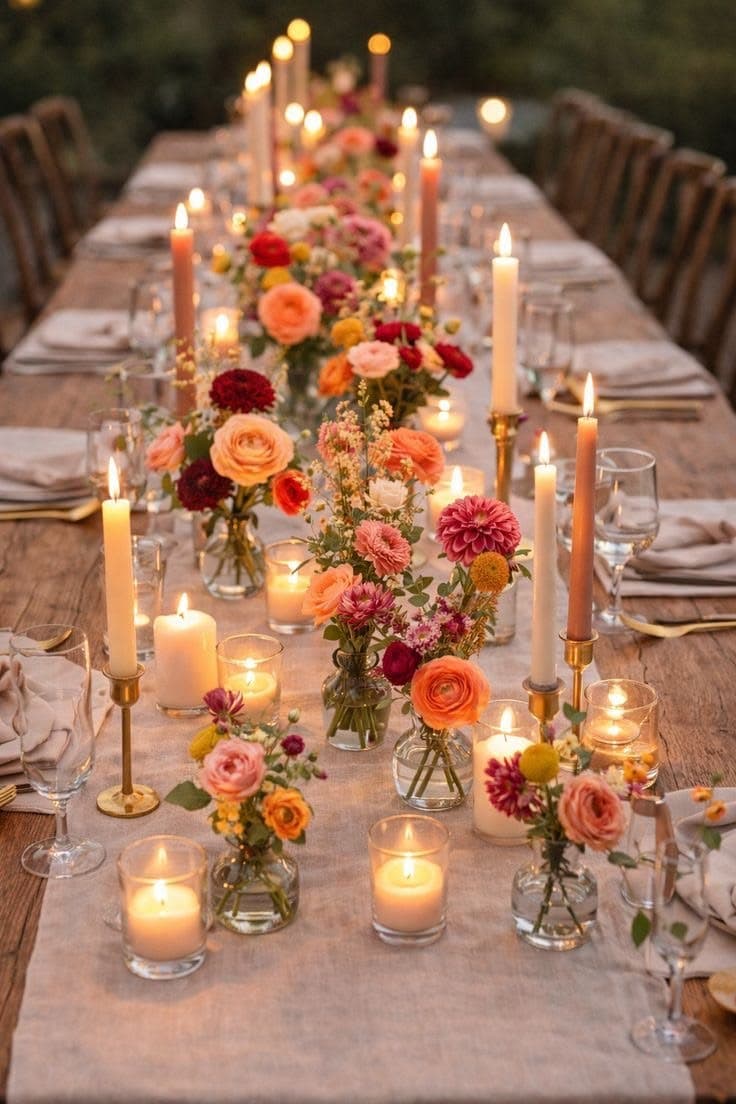
A friend got engaged last spring and the first piece of advice she got, from three different people in the same week, was "cut the flowers." She did. She swapped centerpieces for candles, dropped the arch florals, asked her florist to use more greenery than blooms. She saved around $400.
Then her caterer's final invoice came in $3,800 over what she thought she'd agreed to, because nobody had walked her through service fees, cake-cutting charges, or the 20% gratuity line. The flowers were never the problem.
This is the part of wedding budgeting nobody explains clearly: a few categories quietly eat most of your money, and florals are not one of them. If you want to actually save, you have to know where to look.
what you've been told vs. the actual math
The internet has been repeating the same three things for years:
- "flowers eat half the budget."
- "venue is your biggest line item."
- "just cut the floral budget to save."
Not quite. The math is different, and once you see it laid out, the advice to "cut the flowers" stops making sense as a savings strategy. It might still be the right call for your taste or your priorities, but it is not where the real money lives.
Four categories quietly take the biggest share of almost every wedding budget. None of them are flowers. And most couples don't see it coming until they're deep into vendor contracts.
the real breakdown
Here is what an average wedding budget actually looks like when you break it into percentages:
- Catering: 35–40% of the total. Food, bar, staff, service fees, rentals that come bundled with the catering package. This is almost always the single biggest line item.
- Venue rental: 20–25%. Site fee, ceremony fee if separate, sometimes a required coordinator, sometimes a cleaning fee tacked on at the end.
- Photography and video: 15–20%. Two photographers, a videographer, hours of coverage, albums, raw files. It adds up faster than couples expect.
- Florals: closer to 8%. Bouquets, centerpieces, ceremony installations, boutonnieres. Real money, but a fraction of the first three.
Add catering, venue, and photo/video together and you are at 70–85% of your total spend before a single centerpiece is ordered. That is the number worth sitting with. The conversation about saving money has to start with those three vendors, because that is where the dollars actually are.
what this looks like on a real budget
If your total budget is $40,000:
- Catering at 35–40% is $14,000 to $16,000.
- Venue at 20–25% is $8,000 to $10,000.
- Photo and video at 15–20% is $6,000 to $8,000.
- Flowers at 8% is around $3,200.
Cutting your floral budget by an aggressive 15% saves you roughly $480. Renegotiating your catering quote by the same 15% saves you over $2,000. Same effort. Five times the impact.
the hidden 20% nobody warns you about
Here is the piece that catches most couples off guard: the last 20% of your budget that nobody quotes you for.
This is gratuity for the catering staff. Last-minute dress alterations. The second pair of shoes because the first pair killed your feet at the dress fitting. The day-of extras that weren't in any quote, like a steamer for the gown, an extra hour of bar service, a tip for the band, a Plan B tent because the forecast turned. None of it feels big in the moment. All of it adds up fast.
A short, incomplete list of what typically lives in that hidden 20%:
- Gratuity. Often 18–22% on catering and bar, plus cash tips for hair, makeup, delivery drivers, the officiant, and your DJ or band.
- Alterations. A dress that needs a bustle, a hem, and a take-in can run $400–$800 on top of the dress itself.
- Day-of extras. Steaming, pressing, transportation gaps, a hotel room block deposit, a weather backup plan.
- Vendor meals. Most catering contracts require you to feed your photographer, videographer, planner, DJ, and their assistants.
- Overtime. An extra hour of photo coverage at the end of the night because the sparkler exit ran late.
- Taxes and service charges. Sometimes 25%+ on top of food and beverage, depending on your state.
This is the category that pushes "I'm $2,000 under budget" into "I'm $4,000 over" in the final two weeks. Building a real buffer into your plan is not optional. If your total budget is $40,000, you should be reserving roughly $8,000 of it for this category alone.
red flags to watch for in vendor quotes
Most overspending isn't caused by bad vendors. It's caused by quotes that are technically complete but practically misleading. Things to watch for as you compare:
- Service charge listed separately from gratuity. A 22% service charge is not a tip. Ask, in writing, whether gratuity is included or expected on top.
- "Starting at" pricing. A venue listed at $6,000 might require a $12,000 minimum food and beverage spend. The site fee is not the venue cost.
- Cake-cutting and corkage fees. Catering contracts often charge per slice to cut a cake you already paid a baker for. $1.50 to $4 per guest adds up.
- Required vendors. Some venues require you to use their in-house caterer or rental company, which removes your ability to negotiate.
- Vague hour counts. "Up to 8 hours of coverage" is not the same as "8 hours of coverage." Read the overtime rate before you sign.
- Tax not included in the quoted price. On a $15,000 catering bill, sales tax alone can be $1,200 or more.
None of these are scams. They are standard. They just need to be visible in your budget before you sign, not after.
where to actually start cutting
If you've been told to slash the floral budget and you're staring at a spreadsheet wondering why nothing feels saved, here is a more useful order of operations:
- Renegotiate the catering package. Drop a course, shorten the bar hours, switch from plated to family-style or stations, cut the late-night snack. Cutting flowers saves $400 on average. Renegotiating catering saves $2,000+.
- Question the guest count. Catering and rentals scale per head. Cutting 15 guests saves more than cutting an entire vendor category.
- Re-examine the venue. Look at Friday or Sunday dates, off-season months, or venues that don't require an in-house caterer.
- Trim photo and video hours, not quality. A photographer for 8 hours instead of 10 is usually a $600–$1,200 difference. The first dance and the cake cutting do not need to happen at 11pm.
- Then, if you still want to, look at florals. Greenery-heavy designs, repurposed ceremony arrangements at the reception, fewer bridesmaid bouquets. Real savings, but smaller.
If you want a deeper look at the line items that surprise couples most, our hidden costs guides walk through them category by category.
how to see your real numbers
The reason most couples get blindsided is not because the information is hidden. It is because their budget lives in five different places: a Google sheet, a Pinterest board, a notes app, three vendor emails, and a folder of PDFs. You can't compare what you can't see in one place.
Altared lets you track every budget category, every vendor, and every line item side by side, so you can see exactly where your money is going before it's gone. Catering at the top. Venue underneath. Photo and video next. Florals where they actually fall. The hidden 20% built in from the start, not discovered in week 11. You can get started for free and have your whole budget mapped in an afternoon.
the short version
If you remember nothing else from this:
- Catering is 35–40% of your budget. Venue is 20–25%. Photo and video is 15–20%.
- Florals are closer to 8%. Cutting them saves around $400.
- The last 20% (gratuity, alterations, day-of extras) is the part that breaks budgets.
- Renegotiate the categories that actually move the number. Catering first, venue second, hours of coverage third.
- See every line item in one place before you sign anything.
The flowers were never the problem. The math just needed to be visible.
Frequently asked questions
- What percentage of a wedding budget is catering?
- Catering typically runs 35–40% of a total wedding budget, making it the single largest line item for almost every couple. That figure includes food, bar service, staff, service fees, and any rentals bundled into the package. On a $40,000 budget, that is roughly $14,000 to $16,000. It is also the category with the most negotiating room, since you can adjust courses, bar hours, service style, and guest count to bring the number down without anyone at the wedding noticing a difference.
- Is it actually worth cutting the floral budget to save money?
- It can be, but the savings are smaller than people assume. Florals average around 8% of a wedding budget, and aggressively cutting them saves about $400 on average. Renegotiating your catering contract by the same percentage saves $2,000 or more. If you love flowers, keep them and find savings in catering, venue, or coverage hours instead. If florals are not a priority for you, cutting them is fine, just don't expect it to solve a budget problem on its own.
- What is the hidden 20% of a wedding budget?
- The hidden 20% is the category most couples don't budget for: gratuity for catering and bar staff, last-minute dress alterations, vendor meals, overtime, taxes, service charges, and day-of extras like steaming, transportation, or a weather backup. None of these items feel big individually, but together they routinely add 15–20% on top of a budget that looked complete. Building this buffer in from the start, rather than discovering it in the final two weeks, is the single biggest predictor of staying on budget.
- How much should photography and video cost as part of my wedding budget?
- Photography and video together typically run 15–20% of the total wedding budget. On a $40,000 wedding, that is $6,000 to $8,000 combined. The number scales with hours of coverage, number of shooters, and deliverables like albums or highlight films. If you need to trim, look at hours first rather than quality. Cutting from 10 hours to 8 usually saves $600–$1,200, and the last two hours of a reception are rarely the photos couples treasure most.
- Why does my catering quote keep going up after I sign?
- Usually because the original quote was the food and beverage subtotal, not the final bill. Service charges (often 20–22%), gratuity (sometimes separate from service charge), sales tax, vendor meals, cake-cutting fees, and corkage can add 25% or more on top of the quoted price. Before you sign, ask for an itemized estimate that includes every fee and tax, and confirm in writing whether gratuity is included in the service charge or expected on top of it. Surprises in this category are the number one cause of over-budget weddings.