5 Things Couples Say They'd Spend Differently Next Time
Five wedding budget regrets couples name after the fact, from a $1,500 paper suite to a guest list that took $4,000 with it, plus what to do instead.
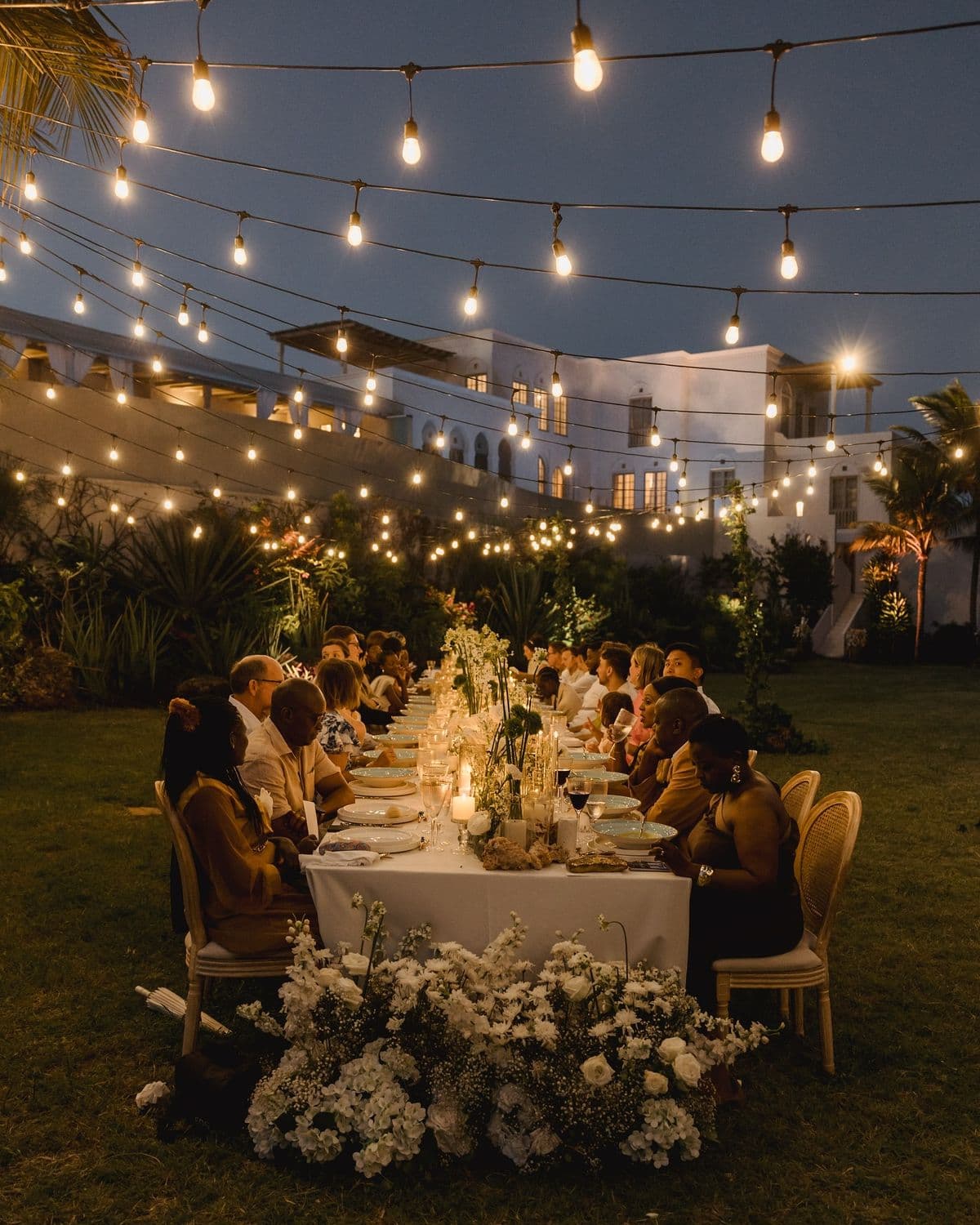
A couple sat down three weeks after their wedding to reconcile the final invoices. The flowers, which they had budgeted at 9% of the total, came in at just over 15%. The paper suite ran $1,500, and they found half of it stacked on tables when they went back for the gift cards. The bar hit $85 a head before the service charge landed, and the service charge was a number nobody had said out loud until the final bill.
None of those were bad decisions. They were just decisions made without the full math in front of them.
That is the pattern in almost every "I'd do it differently" conversation: not regret over taste, but regret over sequencing. The deposit cleared before the real number was visible. Here are the five places it happens most, and what couples say they would do instead.
01. The floral budget quietly doubles
Most couples allocate 8-10% of the total budget to flowers. Most couples spend 15%+.
The gap almost never comes from the initial proposal. It comes from the revisions. You approve a centerpiece, then the florist mentions that the ceremony arch will need to be repurposed (labor charge), that the head table looks bare compared to the guest tables (add six low arrangements), that the bar needs something (two more). Each addition is $200 to $600 and each one feels reasonable in isolation. Stacked, they are the difference between 9% and 16%.
what couples say they'd do instead
Greenery and candles fill the same physical space for less. A long table runner of eucalyptus with taper candles reads as abundant in photos and costs a fraction of what the same visual footprint costs in stems. Roses, peonies, and anything out of season are the line items that move the number.
Two things worth asking your florist before you sign:
- What does this proposal cost if you swap every non-focal arrangement to greenery and candlelight?
- What is the labor and delivery charge, stated separately, including any repurposing between ceremony and reception?
Ask for both versions in writing. Most florists will quote them happily. You just have to ask before the deposit, not after the mockup.
02. the paper suite nobody keeps
Average spend on stationery is $800-2,000. Save the dates, invitations, RSVP cards, envelopes, inner envelopes, details cards, calligraphy, postage, menus, programs, escort cards, table numbers, signage.
Guests recycle nearly all of it. That is not cynicism, it is just what happens to paper after an event.
Digital save the dates plus a simple day-of program can cut that number by 60%. If your suite was headed for $1,500, that is $900 back, which is roughly a second shooter or a meaningful chunk of your rehearsal dinner.
The pieces that actually earn their cost are the ones guests use to navigate the day: escort cards, a bar menu, clear signage if your venue has multiple spaces. The pieces that rarely do: inner envelopes, details cards duplicating your website, and printed programs at a ceremony under 20 minutes.
where to keep the spend
If paper matters to you, put the money in one place instead of spreading it across nine. One beautiful invitation on heavy stock, printed simply, does more than a nine-piece suite in mid-tier paper. Couples who do this rarely list stationery in their regrets.
03. the open bar and the number after the number
A full open bar runs $40-85 per head before service charge. The spread in that range is enormous and it is almost entirely driven by liquor tier and duration, not by how much your guests actually drink.
Then the service charge lands. At 20-24%, an $85 per head bar is closer to $105 by the time it hits the invoice. At 150 guests, that is the gap between $12,750 and $15,750, and the second number is the one you pay.
Beer, wine, and a signature drink saves $20+ per guest. At 150 guests that is $3,000 minimum, usually more, and the overwhelming majority of guests will not register the difference. The people who notice a limited bar are a much smaller group than the people who notice a two-hour cocktail line.
the questions that surface the real bar number
- Is the quoted per-head price before or after service charge and tax?
- Does the price change by hour, and what happens if we extend 30 minutes?
- Are bartenders included or billed separately per bartender?
- Is there a corkage or a bar minimum we have to hit regardless of consumption?
Ask all four in the same email so the answers arrive together. Compare bar quotes side by side in Altared so you are looking at all-in numbers, not the headline rate.
04. venue add-ons nobody remembers
Venue add-ons (lighting, linens, lounges) average $3,000-6,000. Most couples say they noticed none of it on the day.
This category is uniquely hard to evaluate because the venue sells it in a room where you can see it. Uplighting looks transformative during a walkthrough at 4pm with the house lights down. Upgraded linens feel meaningfully nicer when you are touching a swatch. Lounge furniture photographs well in the venue's own gallery.
On the day, you will be in that room for a few hours, mostly seated, mostly talking, mostly not looking at the linens. Your photographer will shoot the room empty for eight minutes before guests enter, and those are the photos that end up on your wall.
That does not mean skip all of it. It means rank it. If one add-on genuinely changes the space (a dark ballroom that needs light, an outdoor tent that needs heaters), buy that one. Buy it first, see what the number is, and then decide about the rest against a real total instead of a menu.
watch for these
Add-ons bundled into a package you cannot itemize. If the venue quotes "enhanced reception package, $5,400," ask for the line items. You are allowed to ask what is inside a package before you buy it.
"Required" vendors with unlisted minimums. Some venues require their in-house lighting or rental partner. Get that partner's price list before you sign the venue contract, not after.
Setup and strike fees that appear only on the final invoice. These run several hundred dollars and are often mentioned verbally as "standard." Standard things belong in writing.
Price changes between the proposal and the contract. Read the contract against the proposal line by line. It happens more than you would think.
More on this in hidden costs.
05. the guest list that took $4,000 with it
Each extra guest costs $150-300 all-in once food and bar land. Plus rentals, plus the linen for their seat, plus the favor, plus the invitation and the postage, plus the extra table that pushes you into another centerpiece.
A guest list that ballooned by 20 people takes $4,000 with it. That is not a hypothetical, that is the arithmetic at the low end of the range.
Cutting 10 guests funds a second shooter, or a honeymoon night, or the videographer you crossed off in month two.
The reason guest lists grow is that they grow in ones and twos, and each addition arrives attached to an emotional reason: your mother's college roommate, your fiancé's coworker who just got engaged, a cousin you have not seen since 2019. Each addition is genuinely hard to say no to in the moment.
make the cost visible before you decide
Build your list with a per-head number attached to it. Not a total, a per-head. When you are looking at "add Sarah and her plus one, $500," the decision changes character. It stops being about whether you like Sarah and starts being about whether that $500 is better spent on Sarah or on something else. Sometimes the answer is Sarah. That is fine. You just made the decision with the number visible, which is the entire point.
Do this before invitations go out, because after that the list is fixed and the only lever left is the per-head cost.
the actual lesson underneath all five
These five categories have nothing in common on the surface. Flowers, paper, bar, venue extras, guests. What they share is timing: in all five, the real number becomes visible after the commitment rather than before it.
The math is always available before you sign. You just have to know where to look for it, and you have to ask for it in a form you can compare.
That means getting every quote as itemized line items, not package totals. It means asking whether the per-head price includes service charge and tax, every single time, for every single vendor. It means putting all of it in one place so you can see what your actual total is instead of carrying five separate PDFs in your head.
save this for your next vendor meeting
- Flowers: ask for a second proposal with greenery and candles in place of non-focal arrangements, and get labor and delivery quoted separately.
- Paper: go digital for save the dates, keep printed pieces to the ones guests use to navigate the day, and spend your paper money in one place instead of nine.
- Bar: confirm whether the per-head number is before or after service charge, and price out beer, wine, and a signature drink as your baseline before you price the full open bar.
- Venue add-ons: itemize every package, rank the add-ons, buy the one that actually changes the room, and decide on the rest against a real total.
- Guest list: attach a per-head number to every name before invitations go out, and remember that 10 fewer guests funds a second shooter.
Add your quotes free at altared.app and track every line item before anything surprises you on the invoice. No scan needed, just paste it in.
Frequently asked questions
- What percentage of a wedding budget should go to flowers?
- Most couples allocate 8-10% of their total budget to flowers, but actual spend lands at 15% or more. The overrun usually comes from additions made after the initial proposal: repurposing labor, extra low arrangements for the head table, something for the bar. Each one is $200 to $600 and feels reasonable alone. To stay near your target, ask your florist for a second version of the proposal with greenery and candles in place of every non-focal arrangement, and get labor and delivery quoted as separate line items before you pay a deposit.
- How much does an open bar cost per person?
- A full open bar runs $40-85 per head before service charge. The range depends mostly on liquor tier and duration rather than consumption. Add a 20-24% service charge and an $85 per head bar is closer to $105 on the invoice, which at 150 guests is the difference between $12,750 and $15,750. Beer, wine, and a signature drink saves $20+ per guest, roughly $3,000 at 150 guests. Always confirm whether a quoted per-head price is before or after service charge and tax, and ask whether bartenders are billed separately.
- How much does each additional wedding guest actually cost?
- Each extra guest costs $150-300 all-in once food and bar land, and that is before rentals, linens, favors, invitation, and postage. A guest list that grows by 20 people takes about $4,000 with it at the low end of that range. The practical move is to attach a per-head number to your list while you are building it, so an addition reads as "$500" rather than just a name. Cutting 10 guests funds a second shooter or a honeymoon night.
- Is it worth paying for venue add-ons like uplighting and upgraded linens?
- Venue add-ons (lighting, linens, lounges) average $3,000-6,000, and most couples say they noticed none of it on the day. Rank them instead of buying the menu. If one add-on genuinely changes the space, a dark ballroom that needs light or a tent that needs heaters, buy that one first, see the real number, then decide about the rest. Ask for any bundled package to be itemized, get price lists from required in-house vendors before you sign the venue contract, and check for setup and strike fees.
- How can I cut wedding stationery costs without it looking cheap?
- Average stationery spend is $800-2,000 for paper most guests recycle. Digital save the dates plus a simple day-of program can cut that by about 60%, so a $1,500 suite becomes closer to $600. Keep the pieces guests actually use to navigate the day: escort cards, a bar menu, signage if your venue has multiple spaces. Cut inner envelopes, details cards that duplicate your wedding website, and programs for a ceremony under 20 minutes. If paper matters to you, put the money into one beautiful invitation on heavy stock rather than spreading it across nine pieces.